From your first loop to a finished project
New to crochet? Start with the basics, then work your way up. Every tutorial here is written in US terms with step photos.
- 22patterns & tutorials
- 3guided paths
- 15game levels
- 40tools explained
- 5calculators
- 1free PDFs
Where are you today?
Choose the sentence that sounds like you. You can switch at any time.
First loop
5 milestones. Tick each one when you have practised it.
-
Milestone 1
Hold the hook and yarn
Pencil or knife grip, a slip knot, and tension that feels relaxed instead of tight.
-
Milestone 2
The chain stitch
Every project starts here. Aim for twenty even chains you can count.
-
Milestone 3
Single crochet
Your first real stitch. Work rows until the edges stay straight.
-
Milestone 4
Half double and double crochet
Taller stitches that grow a project twice as fast.
-
Milestone 5
Finish a first piece
A coaster or dishcloth: start, work, fasten off and weave in the ends.
-
Your goal
Your first finished coaster
Tick the milestones above and this unlocks.
Path complete. That is real progress — pick your next challenge.
First projects
5 milestones. Tick each one when you have practised it.
-
Milestone 1
Read a pattern
Abbreviations, brackets, repeats and the stitch count at the end of a round.
-
Milestone 2
Work in the round
Magic ring, joining rounds and keeping a circle flat.
-
Milestone 3
Gauge and yarn weight
Why a swatch saves a project, and how to choose yarn and hook together.
-
Milestone 4
The granny square
The classic building block. Make one, then make twelve.
-
Milestone 5
A wearable piece
A beanie, headband or scarf from a full pattern, start to finish.
-
Your goal
A hat or scarf you can wear
Tick the milestones above and this unlocks.
Path complete. That is real progress — pick your next challenge.
Grow your skills
5 milestones. Tick each one when you have practised it.
-
Milestone 1
Texture stitches
Moss, waffle, puff and bobble stitches that make simple shapes look special.
-
Milestone 2
Colour changes
Clean stripes, colour changes without knots and carrying yarn.
-
Milestone 3
Amigurumi basics
Tight spirals, invisible decreases and stuffing that keeps its shape.
-
Milestone 4
Joining and finishing
Seams, borders, blocking and ends that never come loose.
-
Milestone 5
A big project
A blanket, cardigan or bag: plan it, track it, finish it.
-
Your goalBrowse all patterns
Your first blanket or amigurumi
Tick the milestones above and this unlocks.
Path complete. That is real progress — pick your next challenge.
Your ticks stay in this browser only. No account needed.
Learn every stitch with a virtual hook and real yarn physics
15 levels, from your first chain to the popcorn stitch. Pick each hook move in the right order: the yarn wraps, swings and settles like the real thing, loops build up on the hook, and the stitch grows in the fabric and on the chart.
- Live yarn simulation
- Chart symbols as you go
- 45 stars and a certificate
Chain
The first stitch of almost every project. Each chain is one yarn over pulled through the loop on the hook.
Pick the first hook move.
- Drag the hook anywhere (or arrow keys).
- Turn it to yarn over: mouse wheel, two fingers, Q / E or the round buttons.
- Dip the tip into a stitch to insert.
- Lift to pull up a loop.
- Slide back along the shaft to draw through loops, one loop per small slide.
Tip: on a keyboard, press the letter shown on each move.
Level complete
Claim your Stitch Lab certificate
Every level finished. Type your name and download a certificate to share.
Every tool, up close
Real photos of 40 crochet tools, each with its type, its job and when it is worth buying. Tap a tool to zoom in on the details and read how to choose it and the mistakes to avoid. Start with the tools marked Starter.
40 tools
 Starter
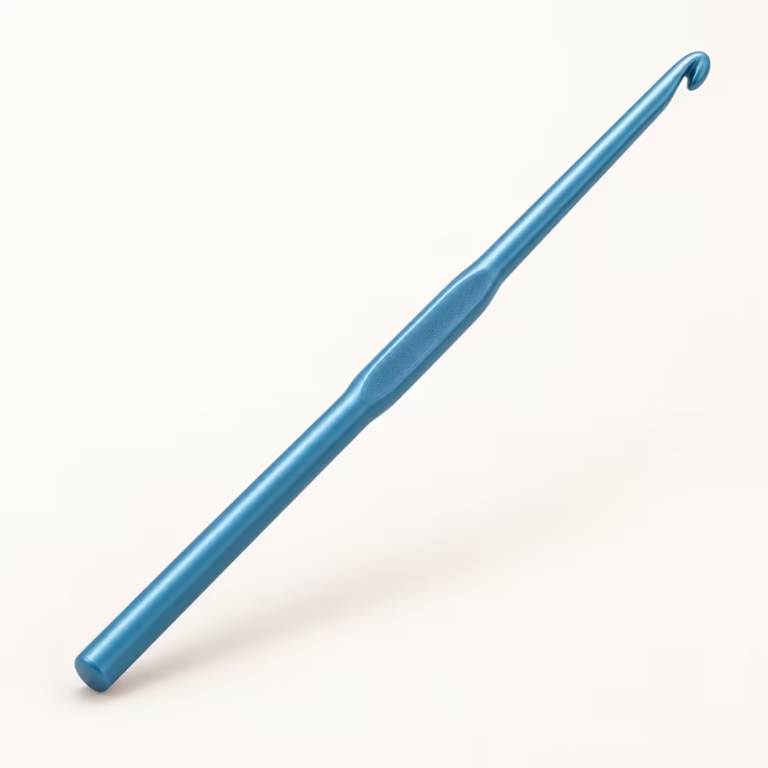
Inline hook
Straight-throat hook · Susan Bates styleMakes every loop the same size, so beginners get even, tidy fabric.
Inline hook
Straight-throat hook · Susan Bates style
Makes every loop the same size, so beginners get even, tidy fabric.
- Sizes
- 2.25–15 mm
- Material
- Aluminium, bamboo, plastic
- Price
- Low
What it is
An inline hook has a head that lines up with the shaft, and a throat that is cut sharply into it. The yarn sits in a deep notch, so every loop comes out the same size.
The head is the same width as the shaft and the throat is cut straight in. Very even stitches.
When you need it
Tight, even work: amigurumi, dense single crochet, and anyone who "throws" the hook down into the stitch.
How to choose
- Start with 5 mm (H-8) for worsted yarn.
- Aluminium glides fastest; bamboo grips slippery yarn.
- A flat thumb rest stops the hook from twisting in your hand.
If your stitches keep catching on the throat, tilt the hook down slightly as you pull through — the straight cut needs a steeper angle than a tapered hook.
Switching between inline and tapered hooks in one project. They give different tension, and your gauge will drift.
 Starter
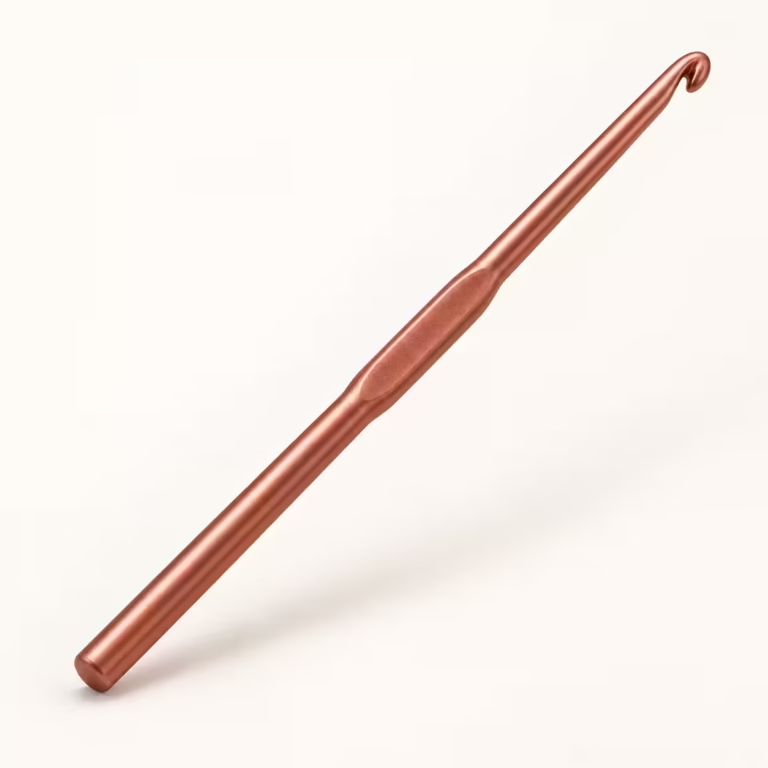
Tapered hook
Boye style · rounded throatLets loops glide on and off quickly for relaxed, fast crochet.
Tapered hook
Boye style · rounded throat
Lets loops glide on and off quickly for relaxed, fast crochet.
- Sizes
- 2–15 mm
- Material
- Aluminium, steel, wood
- Price
- Low
What it is
On a tapered hook the shaft gets slimmer at the throat and the head is a little wider and rounder. Loops slide over it with very little effort.
The throat narrows smoothly into a rounded head, so loops glide on and off. The most common hook.
When you need it
Fast, relaxed crochet: blankets, granny squares and anyone who scoops the hook rather than pushing it.
How to choose
- Pick the size printed on your yarn label.
- Coloured aluminium makes sizes easy to spot in a bag.
- Try both styles once; most people prefer one strongly.
Measure the size on the shaft, not the head. The working diameter is the part just below the throat.
Holding the hook too close to the head. Grip at the thumb rest so the loops can slide freely.
 Starter
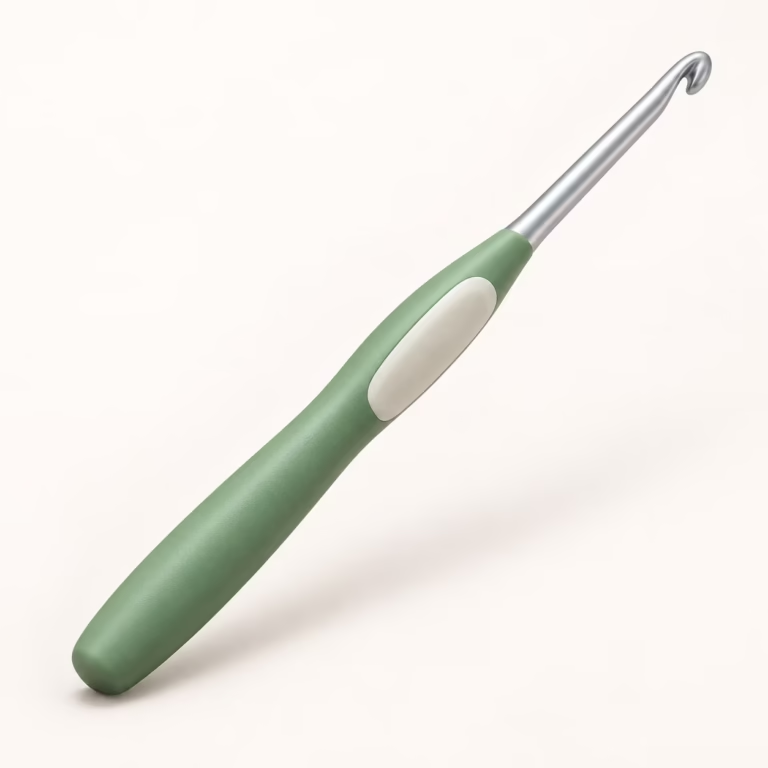
Ergonomic hook
Soft-grip hook · comfort handleSpreads the pressure across your hand, so you can crochet longer without pain.
Ergonomic hook
Soft-grip hook · comfort handle
Spreads the pressure across your hand, so you can crochet longer without pain.
- Sizes
- 2–10 mm
- Handle
- Rubber, silicone, resin
- Price
- Medium
What it is
A metal hook set into a cushioned handle made of rubber, silicone or resin. The wider grip means your fingers clench less.
A thick, soft handle spreads the pressure. The kindest choice for long evenings and sore hands.
When you need it
Long sessions, big blankets, and anyone with wrist pain, arthritis or a tight grip.
How to choose
- Hold it before you buy: the handle should fill your hand without a squeeze.
- Pencil holders like a slimmer handle; knife holders like a fatter one.
- Check that the metal part is a single piece and cannot twist out.
Buy one ergonomic hook in the size you use most (often 5 mm) before buying a full set.
Cheap foam grips that slide off. They compress and the hook ends up wobbling.
 Next step
Interchangeable hook set
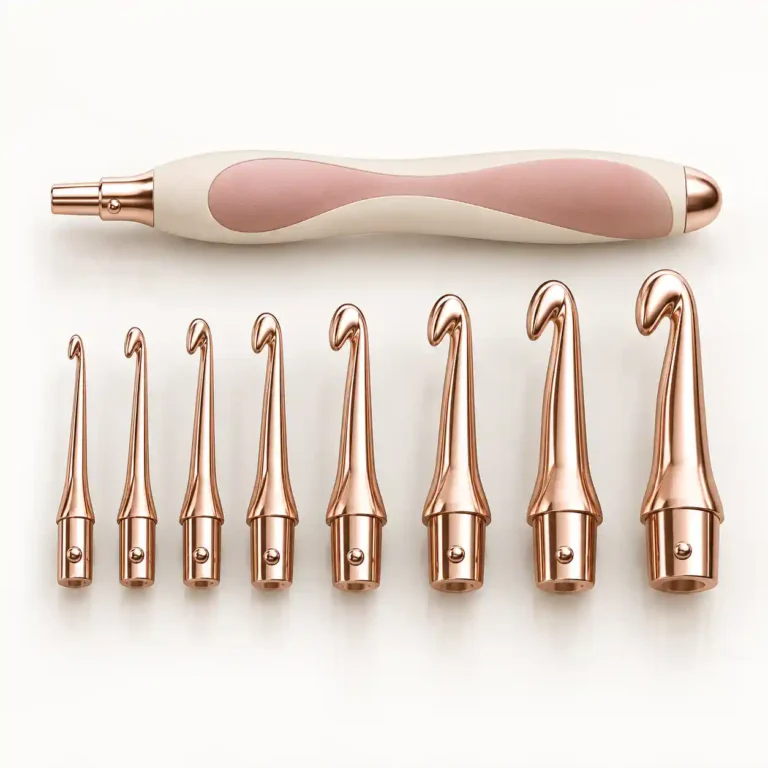
Hook heads and one handle · modular hooksGives you every common size with one comfortable handle, in a fraction of the space.
Interchangeable hook set
Hook heads and one handle · modular hooks
Gives you every common size with one comfortable handle, in a fraction of the space.
- Sizes
- 2–10 mm heads
- Material
- Aluminium, silicone
- Price
- Medium
What it is
A cushioned handle with a threaded metal end, and a set of separate hook heads that screw or click into it. Every size feels the same in your hand.
One ergonomic handle and a row of screw-in hook heads, from small to large. Swap the size in seconds.
When you need it
Crocheters who switch yarn weights often, travel kits, and anyone who wants ergonomic comfort in every size without buying many handles.
How to choose
- Heads that lock firmly, with no wobble or click while you work.
- Sizes engraved on each head, not printed.
- A case or card that keeps every head in its place.
Check the head is screwed fully home before you start a project. A half-turn of play changes your tension.
Letting loose heads roll around in a bag. They are small and the size you need is always the one that is missing.
 Next step
Wooden hooks and hook stand
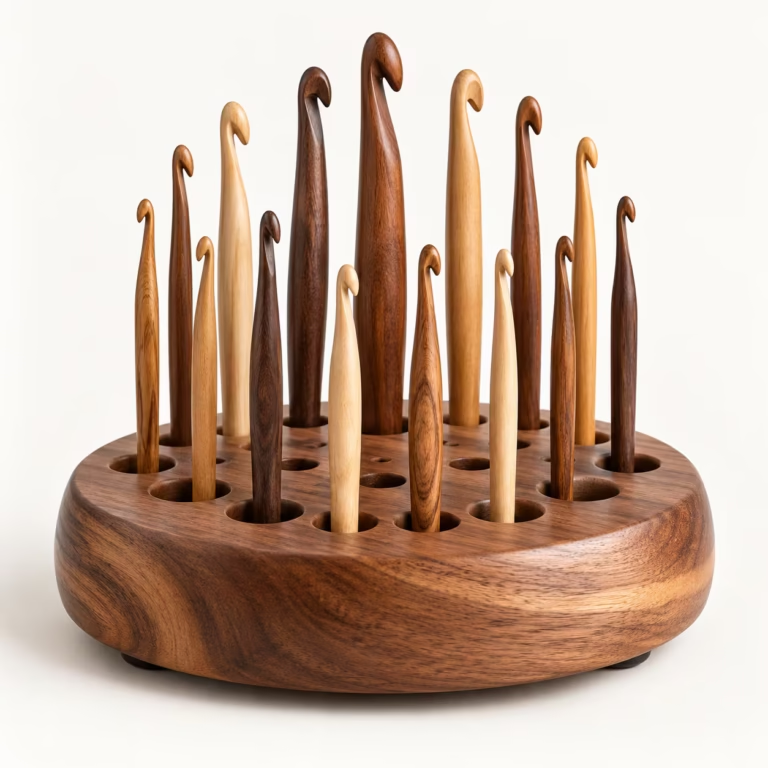
Hardwood hooks · hook holderWarm, grippy hooks for slippery yarn, kept upright and sorted on a wooden stand.
Wooden hooks and hook stand
Hardwood hooks · hook holder
Warm, grippy hooks for slippery yarn, kept upright and sorted on a wooden stand.
- Sizes
- 3.5–15 mm
- Material
- Hardwood, bamboo
- Price
- Medium
What it is
Hooks carved from hardwoods such as walnut, maple or rosewood. Wood is warm and slightly textured, so smooth yarns do not slide off. The stand keeps each hook in its own hole.
Hand-turned hardwood and bamboo hooks that hold the yarn a little, displayed by size in a round stand.
When you need it
Slippery cotton, bamboo and silk yarn, people with cold hands or metal sensitivity, and large sizes that are lighter in wood.
How to choose
- Dense hardwood for sizes under 5 mm; softer woods can snap when small.
- A polished, sealed finish without rough grain at the throat.
- A stand with holes ordered from small to large.
Rub a little beeswax into a wooden hook that starts to drag. The yarn glides again and the wood is protected.
Leaving wooden hooks in hot cars or wet bags. Wood can warp or split.
 Specialist
Steel hook
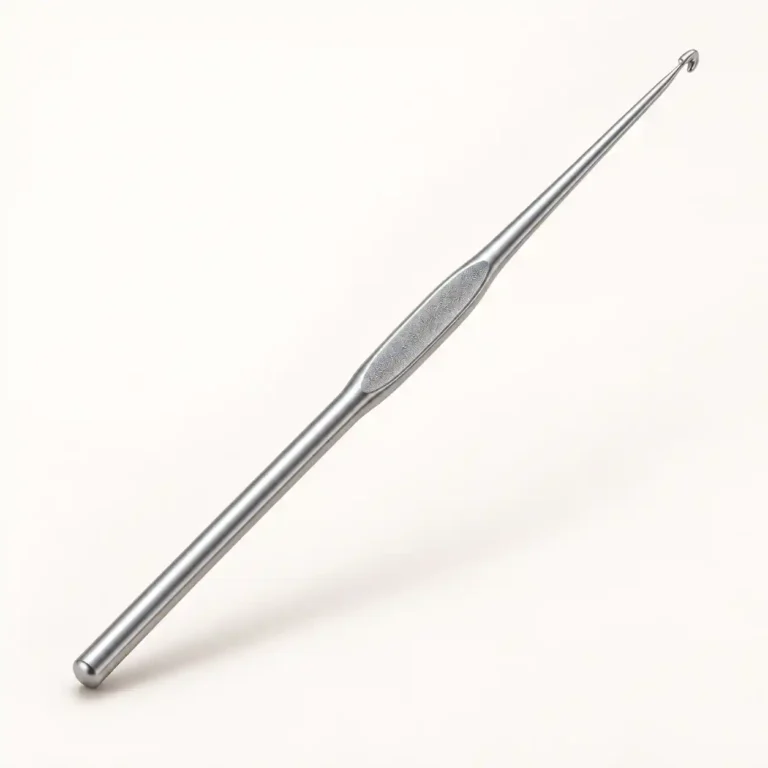
Thread hook · lace hookWorks fine cotton thread into lace, doilies and delicate edgings.
Steel hook
Thread hook · lace hook
Works fine cotton thread into lace, doilies and delicate edgings.
- Sizes
- 0.6–2.25 mm
- Material
- Steel
- Price
- Low
What it is
Very fine hooks made of steel so they do not bend. Steel hooks use their own numbering, where a bigger number means a smaller hook.
Tiny sizes from 0.6 to 2.25 mm for cotton thread, lace and doilies.
When you need it
Crochet thread, doilies, lace edgings, jewellery and very fine amigurumi.
How to choose
- Size 7 (1.65 mm) is a friendly start with size 10 thread.
- A cork or soft handle helps your grip on such a thin shaft.
- Look for a smooth, polished head; rough steel splits thread.
Work in good daylight and use a contrasting surface on your lap; fine stitches are much easier to see.
Starting crochet with thread. Learn your stitches with worsted yarn first.
 Specialist
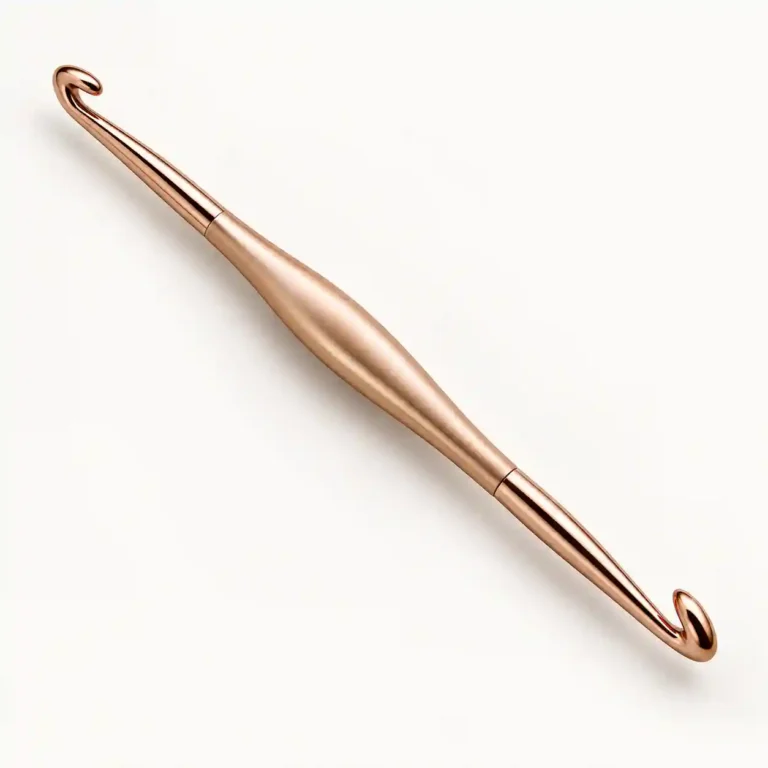
Double-ended hook
Cro-hook · two-headed hookPuts two sizes, or two working ends, on one tool for reversible two-colour work.
Double-ended hook
Cro-hook · two-headed hook
Puts two sizes, or two working ends, on one tool for reversible two-colour work.
- Sizes
- 2–10 mm
- Material
- Aluminium, plated
- Price
- Low to medium
What it is
A single shaft with a hook at both ends, often in two different sizes. Long versions are used for cro-hook (double-ended Tunisian) work, where loops are added with one colour and worked off with another.
A hook with a head at each end: two sizes in one tool, or the cro-hook for reversible two-colour fabric.
When you need it
Reversible two-colour fabric, travel (two sizes in one tool), and switching between a pattern size and an edging size.
How to choose
- Sizes printed near each head, so you always know which end you hold.
- A smooth middle grip with a slight swell for your fingers.
- Matching sizes at both ends for cro-hook work.
For cro-hook work, slide the work to the other end instead of turning it. That is the whole trick.
Gripping across the far head. It digs into your palm; hold the hook in the middle.
 Next step
2 photos
Next step
2 photos
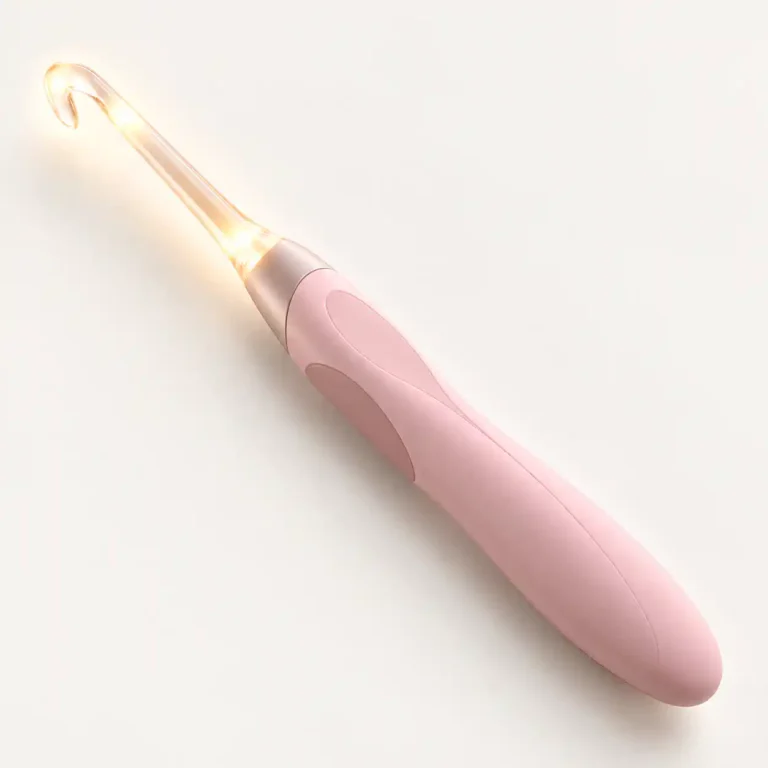
Light-up hook
LED crochet hook · glowing hookLights the stitch you are working into, so dark yarn and dim rooms stop being a problem.
Light-up hook
LED crochet hook · glowing hook
Lights the stitch you are working into, so dark yarn and dim rooms stop being a problem.
- Sizes
- 2.5–6.5 mm
- Power
- Button cell or USB
- Price
- Medium
What it is
A transparent acrylic hook fitted into a handle with a small battery and LED. The light travels down the shaft and lights up the stitch around the head.
A clear hook with a tiny LED in the handle. The whole shaft glows and shows you exactly where to insert it.
When you need it
Navy, black and dark green yarn, evening crochet on the sofa, travel and anyone whose eyesight finds dark stitches hard.
How to choose
- Replaceable batteries or USB charging, not a sealed one-use light.
- A sizes set from 2.5 to 6.5 mm covers most yarns.
- A smooth acrylic head without moulding seams.
Switch the light off when you work light-coloured yarn. It saves the battery and the glow is only needed for dark colours.
Pushing hard on thin acrylic sizes. They can snap where a metal hook would only bend.
 Specialist
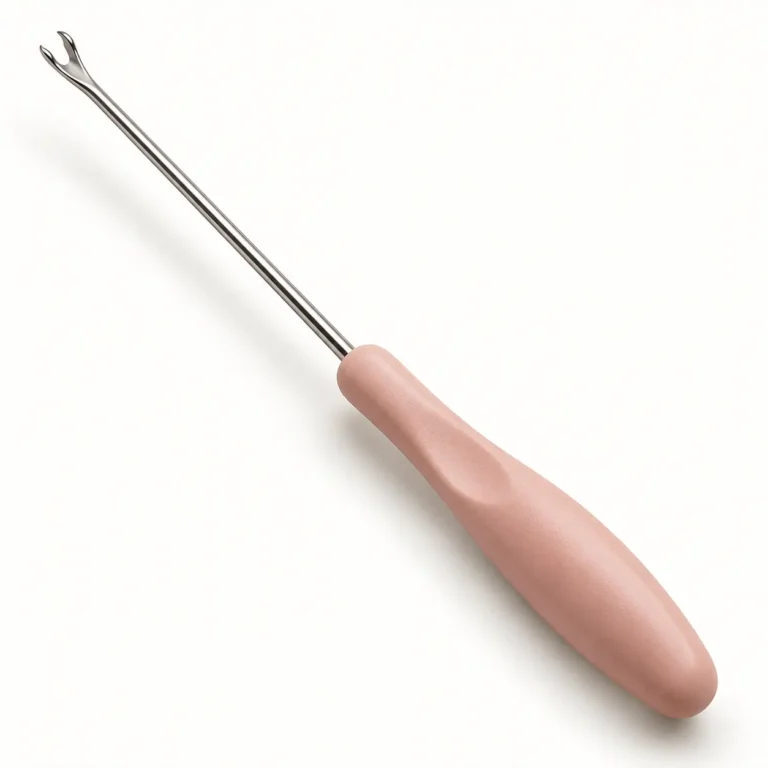
Latch hook
Rug hook · latchet toolPulls short lengths of yarn through canvas or a stitch and locks them with a hinged latch.
Latch hook
Rug hook · latchet tool
Pulls short lengths of yarn through canvas or a stitch and locks them with a hinged latch.
- Use
- Rugs, hair, fringe
- Material
- Steel and plastic
- Price
- Low
What it is
A steel shaft with a hook and a small pivoting latch, set in a comfortable handle. The latch closes as you pull back, so the yarn cannot slip off.
A hook with a tiny hinged latch that closes over the yarn. Made for rugs, fringe, hair on dolls and fixing dropped stitches.
When you need it
Latch-hook rugs and cushions, adding hair to amigurumi, attaching fringe, and picking up dropped or laddered stitches.
How to choose
- A latch that swings freely without sticking.
- A cushioned handle for long rug sessions.
- Fine latch hooks for doll hair; standard size for rug canvas.
For amigurumi hair, fold the strand in half, pull the fold through with the latch hook, then pass the ends through the loop for a lark’s-head knot.
Using it as a regular crochet hook. The latch catches and makes uneven loops.
 Starter
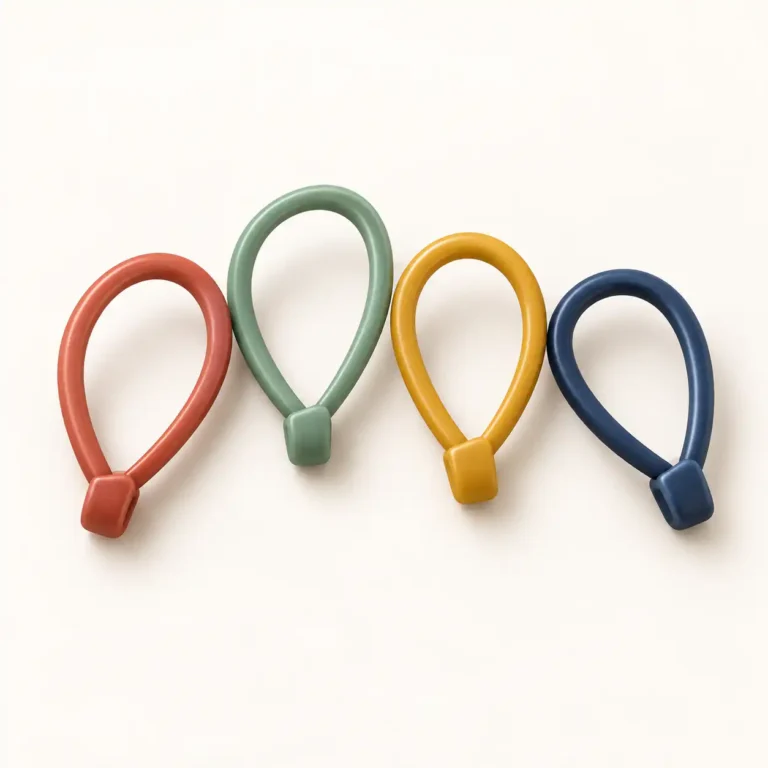
Locking stitch markers
Removable markers · clip markersMarks the first stitch of a round so you never lose your place or your count.
Locking stitch markers
Removable markers · clip markers
Marks the first stitch of a round so you never lose your place or your count.
- Pack
- 20–100 pieces
- Material
- Plastic, metal
- Price
- Very low
What it is
Small plastic or metal clips that open and lock like a safety pin. Unlike knitting ring markers, they can be put into any stitch and taken out again.
Clip one into the first stitch of a round so you never lose your place.
When you need it
Marking the first stitch of each round, counting long chains, and holding live loops when you take a break.
How to choose
- Locking (openable) markers, not closed rings.
- Bright colours you can see against your yarn.
- A smooth clasp that does not snag fibres.
In amigurumi, move the marker up into the first stitch of every new round. Spiral rounds have no visible join.
Using a scrap of yarn for long projects. It works, but it is easy to stitch over by mistake.
 Next step
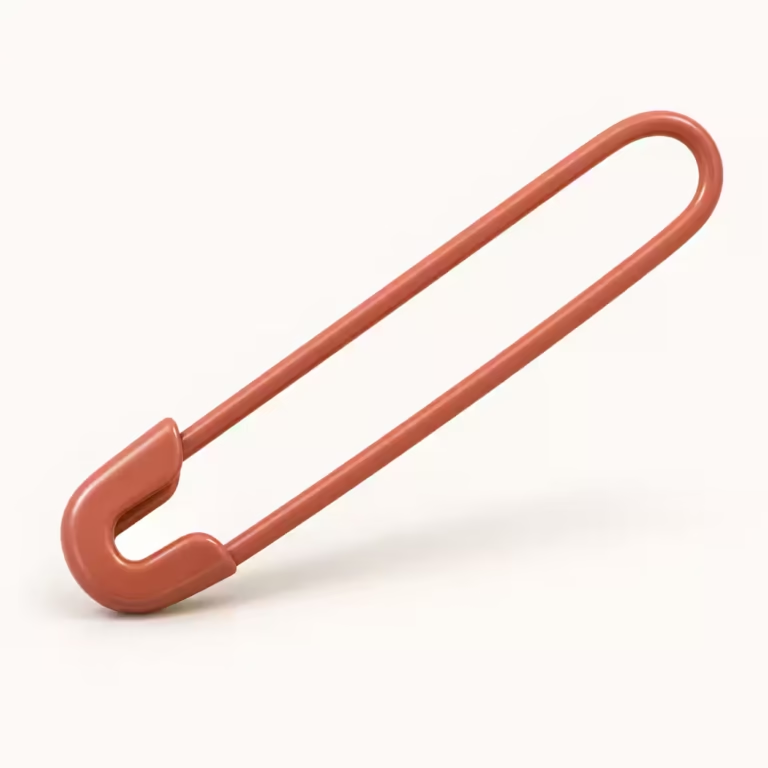
Stitch holder pin
Coil-less safety pin · loop keeperHolds a live loop or a group of stitches safely while you put the work down.
Stitch holder pin
Coil-less safety pin · loop keeper
Holds a live loop or a group of stitches safely while you put the work down.
- Length
- 4–10 cm
- Material
- Coated steel
- Price
- Very low
What it is
A long pin with a smooth, coil-less clasp. Nothing catches on the yarn, and it opens wide enough for several stitches or a chunky loop.
A long coil-less safety pin that keeps your working loop from unravelling between sessions.
When you need it
Parking the working loop in a bag, holding the stitches of a sleeve or strap, and marking a place to come back to.
How to choose
- Coil-less, so fibres cannot get trapped in a spring.
- Long pins for chunky yarn; medium for worsted.
- A coated finish that will not rust or stain.
Before you stop for the day, enlarge the working loop and slip the pin through it. The hook can go back in the case and nothing unravels.
Leaving a metal pin in damp, unwashed work for weeks. Cheap pins can mark light yarn.
 Next step
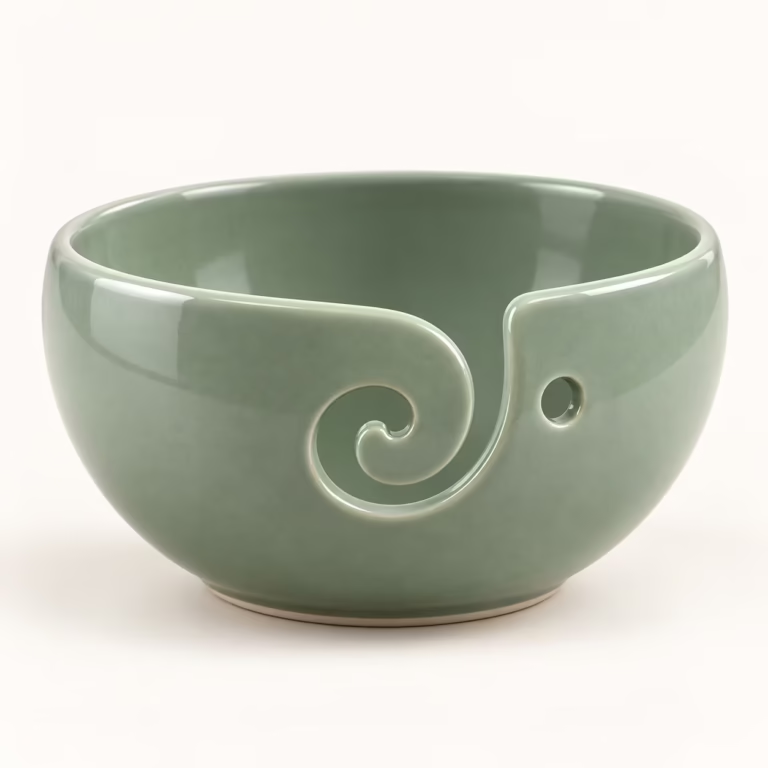
Yarn bowl
Yarn holderKeeps the ball still and clean while it feeds smoothly to your hook.
Yarn bowl
Yarn holder
Keeps the ball still and clean while it feeds smoothly to your hook.
- Diameter
- 15–18 cm
- Material
- Ceramic, wood, bamboo
- Price
- Medium
What it is
A ceramic, wooden or bamboo bowl with a curled slot. The yarn feeds through the slot so the ball stays put while it unwinds.
A heavy bowl with a slot. The ball stays put instead of rolling under the sofa.
When you need it
Crocheting from a ball on a sofa or table, especially with pets or children around.
How to choose
- Heavy ceramic or wood that will not tip over.
- A slot with a smooth, glazed edge.
- Big enough for the largest ball you use.
Wind skeins into centre-pull balls first. They sit still in the bowl and feed more evenly.
Bowls with a rough or unglazed slot. They wear and fuzz the yarn.
 Next step
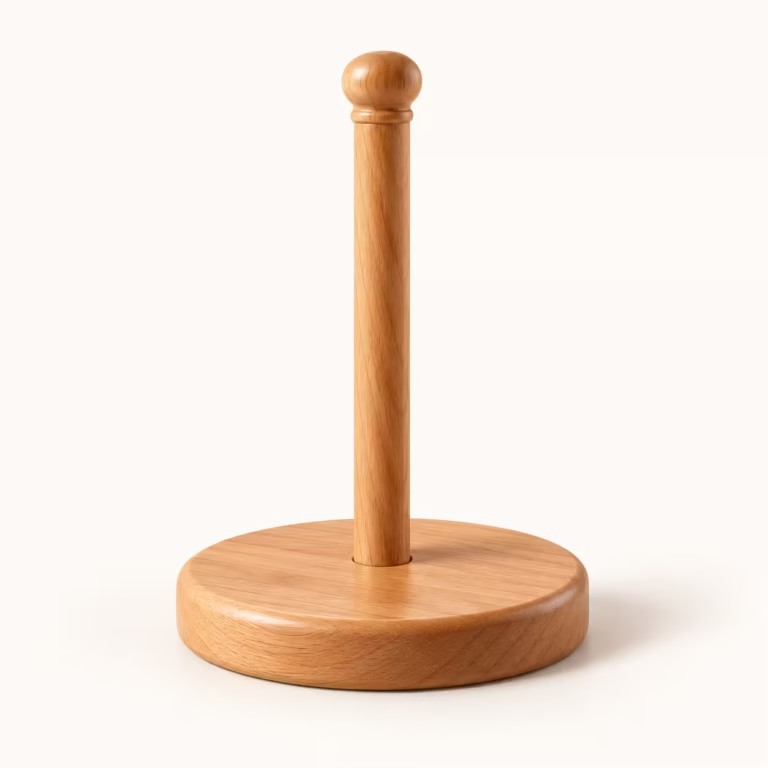
Yarn holder stand
Yarn spindle · cake dispenserLets a yarn cake spin freely as you pull, so it unwinds without twists or tugs.
Yarn holder stand
Yarn spindle · cake dispenser
Lets a yarn cake spin freely as you pull, so it unwinds without twists or tugs.
- Fits
- Cakes and cones
- Material
- Beech or bamboo
- Price
- Low to medium
What it is
A turned wooden spindle on a wide, heavy base. The cake or cone sits on the post and turns as you pull, instead of flopping around on the floor.
A wooden post on a weighted base. Drop a yarn cake over it and the yarn feeds smoothly.
When you need it
Centre-pull cakes, yarn cones, very fine or slippery yarn and long sessions at a table.
How to choose
- A heavy base that does not tip when you pull quickly.
- A smooth, sealed post so the cake can turn.
- A post tall enough for 200 g cakes.
Use the outside end when the cake is on a stand. The cake turns, the yarn does not twist and it never collapses into a tangle.
Light plastic stands for heavy cones. They slide across the table on every pull.
 Specialist
3 photos
Specialist
3 photos
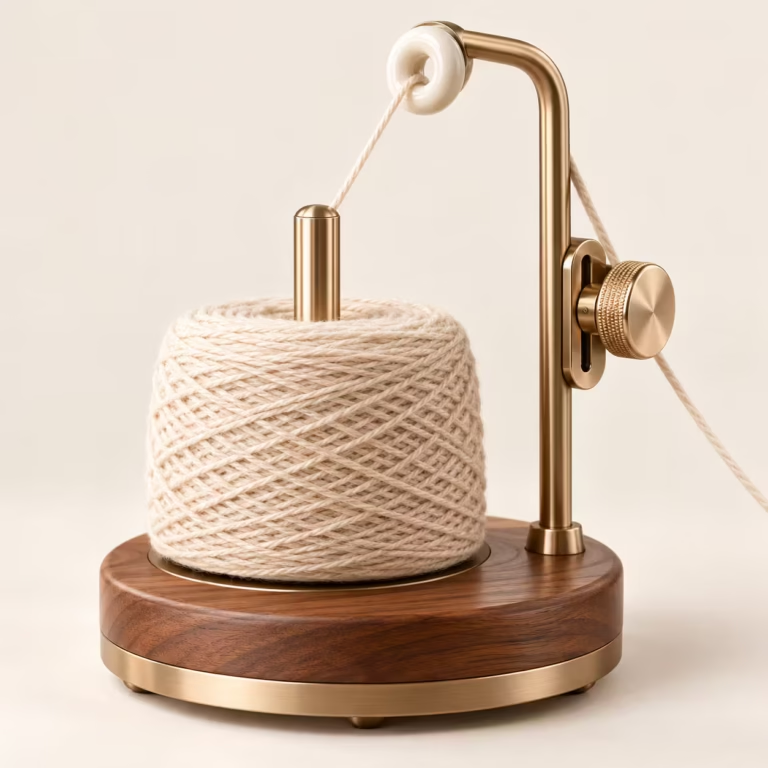
Tension yarn holder
Spinning yarn dispenser · yarn feeder with guideSpins the yarn cake and feeds the strand through a guide at an even, adjustable tension.
Tension yarn holder
Spinning yarn dispenser · yarn feeder with guide
Spins the yarn cake and feeds the strand through a guide at an even, adjustable tension.
- Fits
- Cakes, balls, cones
- Material
- Wood or resin, brass
- Price
- Medium to high
What it is
A heavy base with a rotating platform and a central post that holds the cake or ball. A tall arm carries one or two ceramic or metal eyelets and a knurled knob that adds light drag, so the yarn leaves at the same tension every time.
A turntable base with a post for the cake and an arm with guide eyelets and a tension knob. Yarn arrives smooth, untwisted and never tugged.
When you need it
Long sessions at a table, slippery or splitty yarn, fine thread, amigurumi where even tension shows, and crocheters who struggle to control tension with the yarn hand.
How to choose
- A heavy, non-slip base; light stands slide when you pull.
- Smooth ceramic or polished eyelets that cannot fuzz the yarn.
- An adjustable tension knob, and a platform or bowl that fits 100–200 g cakes.
Start with the knob almost loose and tighten it a little at a time. You want just enough drag that the cake stops when you stop pulling.
Too much tension on soft or fluffy yarn. It stretches the strand and your stitches shrink after washing.
 Specialist
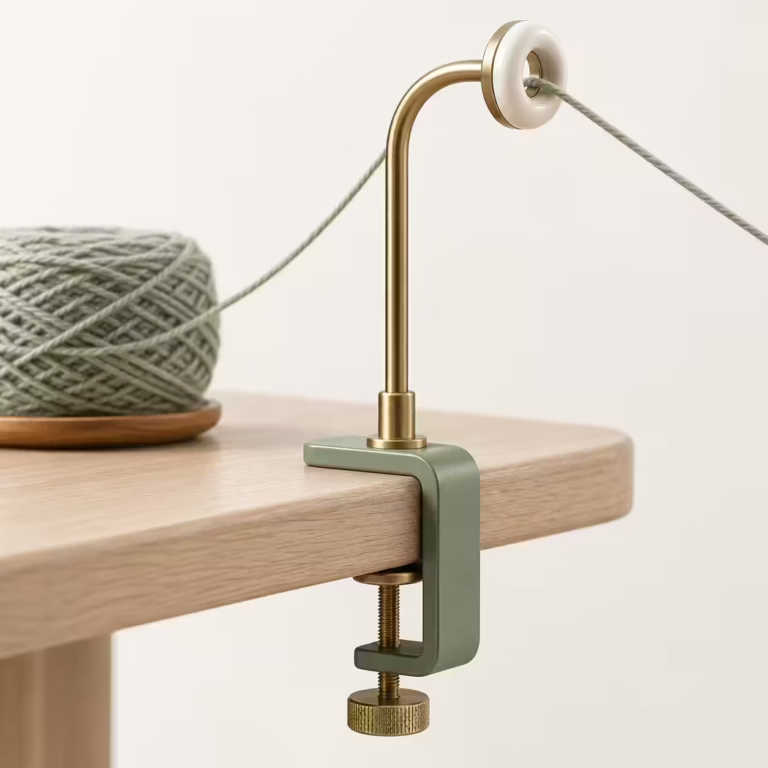
Table-clamp yarn guide
Clamp-on yarn feeder · overhead guideLifts the yarn above the table and feeds it through a smooth eyelet, so it never drags, snags or tangles.
Table-clamp yarn guide
Clamp-on yarn feeder · overhead guide
Lifts the yarn above the table and feeds it through a smooth eyelet, so it never drags, snags or tangles.
- Mount
- Screw clamp, up to 5 cm
- Material
- Brass, ceramic, steel
- Price
- Medium
What it is
A curved metal arm on a screw clamp, topped with a ceramic or polished eyelet. It holds the strand at a fixed height and angle, so the yarn leaves the cake in a straight, even line.
A brass arm with a ceramic eyelet that screws onto the edge of any table. The yarn runs from the cake, up through the guide and down to your hook.
When you need it
Crocheting at a table or desk, cakes that wobble or roll, slippery or fine yarn, and keeping the strand away from pets and the table edge.
How to choose
- A clamp with a soft pad that will not mark your table.
- A smooth ceramic eyelet; rough metal fuzzes the yarn.
- An arm tall enough to clear the cake, about 20–30 cm.
Put the cake on a small plate or turntable below the guide. It turns freely and the yarn feeds without a single tug.
Clamping onto glass or thin, soft tabletops. Use a thicker shelf or a wooden board instead.
 Next step
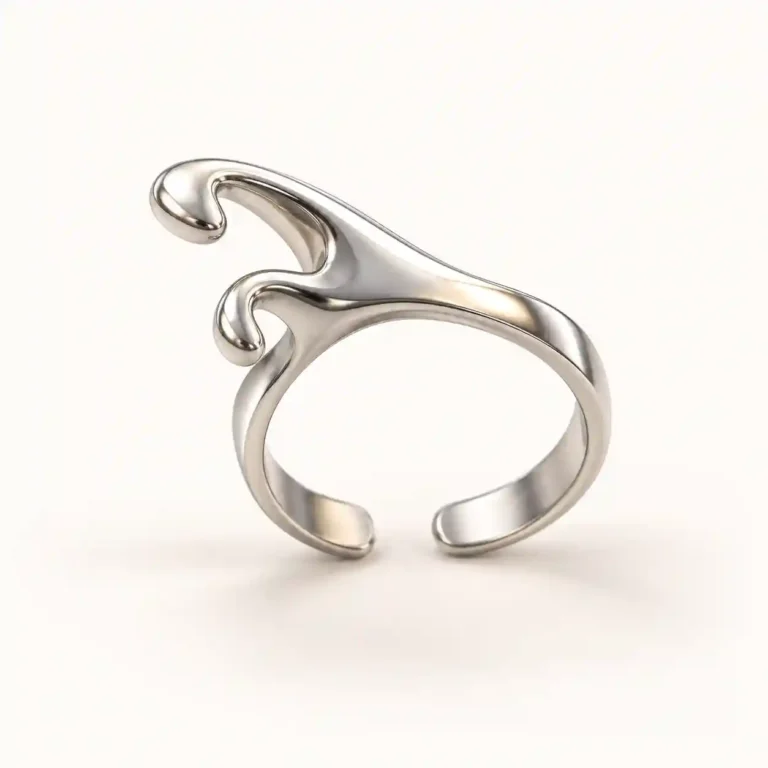
Yarn tension ring
Finger yarn guide · crochet ringFeeds the yarn at the same tension every time, so your stitches stay even.
Yarn tension ring
Finger yarn guide · crochet ring
Feeds the yarn at the same tension every time, so your stitches stay even.
- Strands
- 1–2
- Material
- Stainless steel, alloy
- Price
- Low
What it is
An open, adjustable metal ring worn on the index finger of your yarn hand, with one or two curls that the yarn slides through.
An adjustable ring with a curled guide. The yarn runs through it instead of being wrapped around your fingers.
When you need it
Beginners who find tension hard, sore fingers from wrapping yarn, and slippery yarn like cotton, bamboo or silk.
How to choose
- An adjustable band that you can open and close gently.
- Polished curls with no sharp edges.
- Wear it on the finger you already use to guide the yarn.
Wear it on the middle bone of your index finger, not at the base. You keep more control and your hand relaxes.
Bending the band open and closed many times. Metal fatigues and snaps; set the size once.
 Specialist
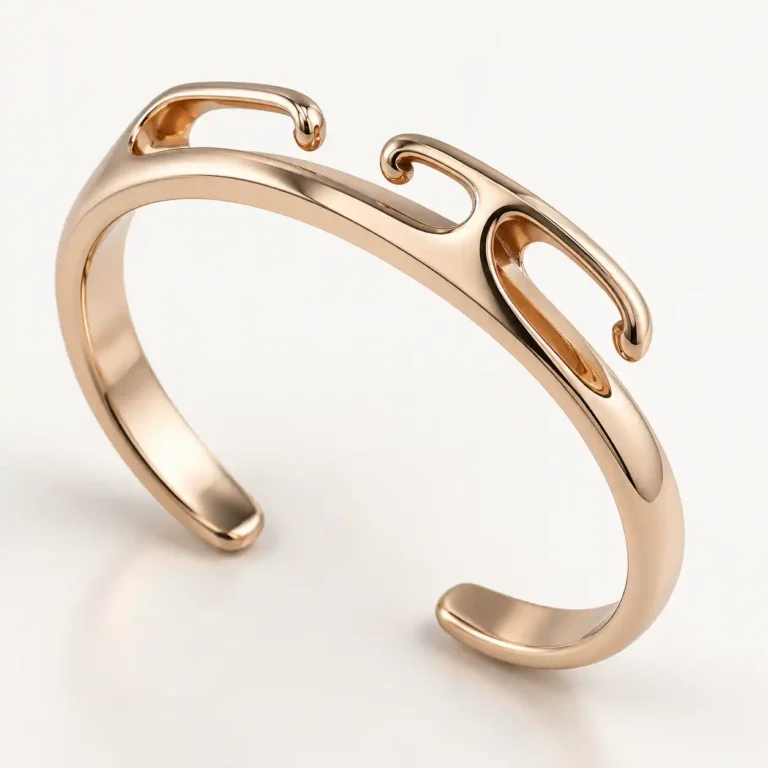
Colour-work guide ring
Multi-strand ring · Fair Isle guideKeeps two or three colours apart and tangle-free in tapestry and stranded crochet.
Colour-work guide ring
Multi-strand ring · Fair Isle guide
Keeps two or three colours apart and tangle-free in tapestry and stranded crochet.
- Strands
- 2–4
- Material
- Plated alloy
- Price
- Low
What it is
An open ring with two to four curls in a row. Each colour runs through its own guide, so the strands never twist around each other.
A wider ring with several separate guides, one for each colour you carry.
When you need it
Tapestry crochet, mosaic and Fair Isle-style colour-work, and holding two strands together.
How to choose
- As many guides as the colours you usually carry.
- Smooth, rounded curls; colour-work yarn passes through them constantly.
- A size that sits firmly but does not press.
Always thread the colours in the same order, light to dark. You will pick the right strand without looking.
Carrying more than three strands in one ring as a beginner. The tension evens out only with practice.
 Specialist
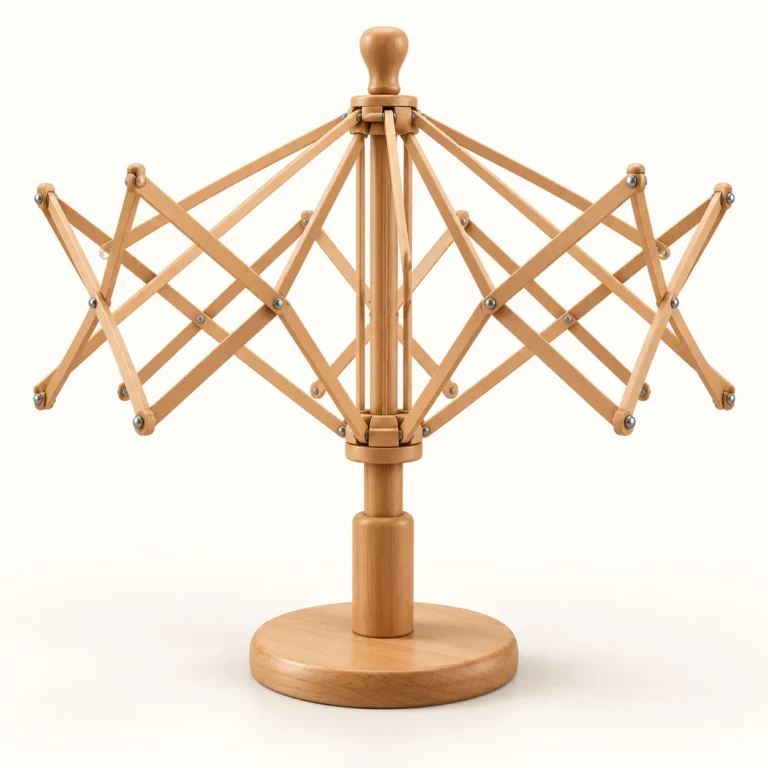
Umbrella swift
Yarn swift · hank holderHolds an open hank and spins as you wind, so the yarn never tangles.
Umbrella swift
Yarn swift · hank holder
Holds an open hank and spins as you wind, so the yarn never tangles.
- Opens to
- 50–100 cm
- Material
- Wood
- Price
- Medium
What it is
A spinning frame of wooden slats on a central post. It opens to fit the size of the hank and turns smoothly as the yarn is pulled off.
A wooden frame that opens like an umbrella. You stretch a hank over it and it turns while you wind.
When you need it
Hand-dyed and indie yarns sold as twisted hanks, which must be wound before you can crochet.
How to choose
- Opens wide enough for your largest hanks.
- Smooth slats and pins that will not snag fibres.
- A table clamp or a heavy base that stays put.
Untwist the hank, find the ties and keep them on until it sits on the swift. Then cut the ties and wind.
Opening the swift so wide that the hank is stretched tight. The yarn wears and winds unevenly.
 Specialist
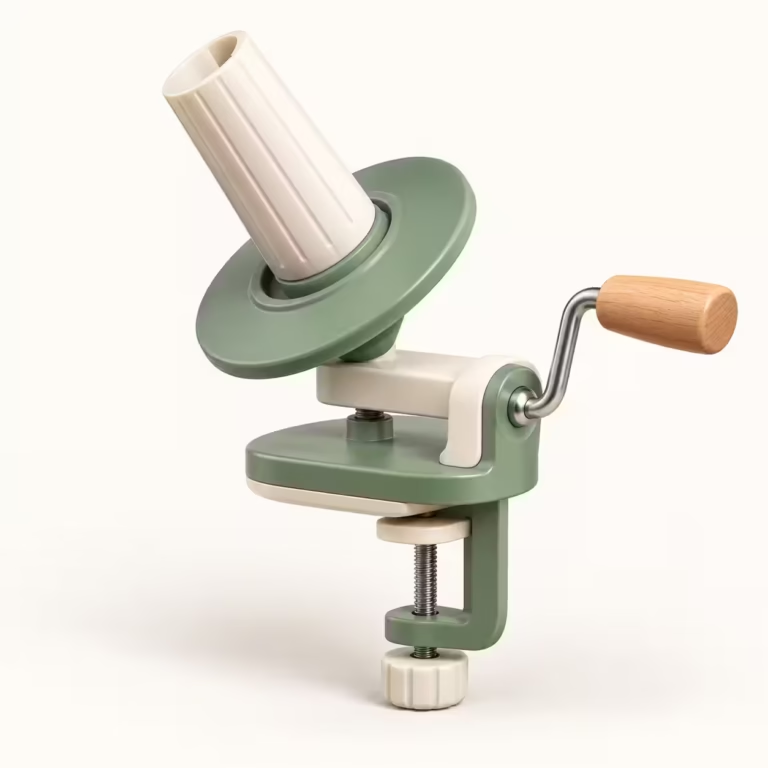
Ball winder
Yarn winder · cake makerTurns loose yarn into a neat, flat-topped centre-pull cake in a minute.
Ball winder
Yarn winder · cake maker
Turns loose yarn into a neat, flat-topped centre-pull cake in a minute.
- Capacity
- 100–250 g
- Material
- Plastic, metal
- Price
- Medium
What it is
A geared winder with a spinning cone and a guide arm. As you turn the handle, the yarn is laid in a criss-cross pattern into a firm cake.
Clamp it to the table, turn the handle and get a stable cake that pulls from the centre.
When you need it
Hanks from a swift, re-winding frogged yarn, and splitting a skein into two equal cakes.
How to choose
- A capacity of 100 g or more.
- A firm clamp that fits your table edge.
- Smooth gears that turn without jerking.
Wind at a slow, steady speed with light tension. Winding tight stretches the yarn, and it shrinks back after.
Overfilling the cone. The cake slips off and collapses into a knot.
 Starter
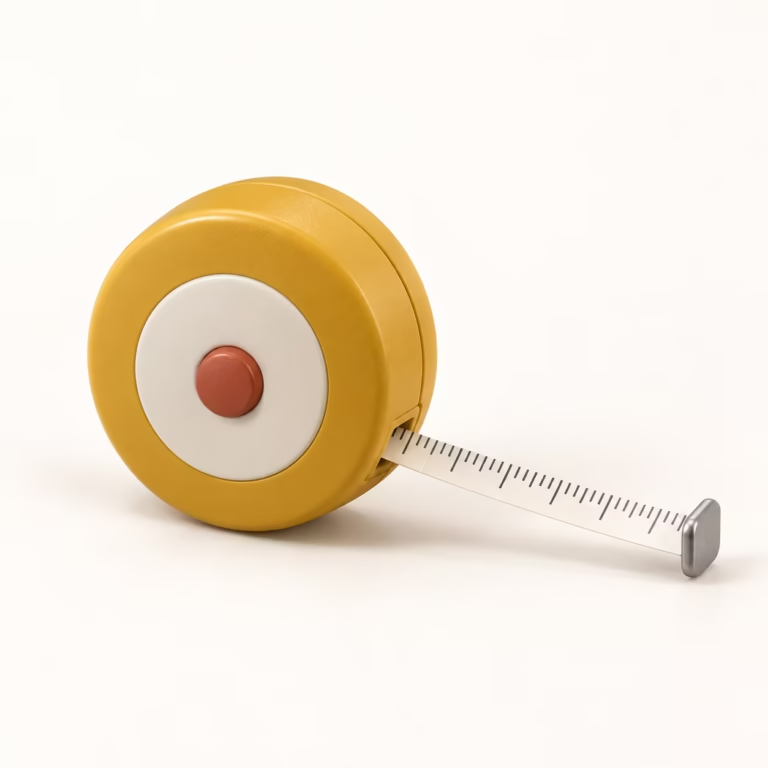
Tape measure
Soft measuring tape · retractable tapeMeasures gauge, sizes and lengths so the finished piece fits.
Tape measure
Soft measuring tape · retractable tape
Measures gauge, sizes and lengths so the finished piece fits.
- Length
- 150 cm / 60 in
- Units
- cm and inches
- Price
- Very low
What it is
A flexible tape marked in centimetres and inches. Soft tapes follow curves, such as a head or a chest.
A soft tape for gauge, head sizes and blanket widths.
When you need it
Checking gauge, measuring a head for a hat, and making sure blanket edges are the same length.
How to choose
- Both cm and inches on the tape.
- Fibreglass tape, which does not stretch over time.
- A retractable case keeps it tidy in a project bag.
Measure work flat on a table, never on your lap or while it hangs; crochet stretches under its own weight.
Measuring gauge across the edge stitches. Measure in the middle of the swatch.
 Next step
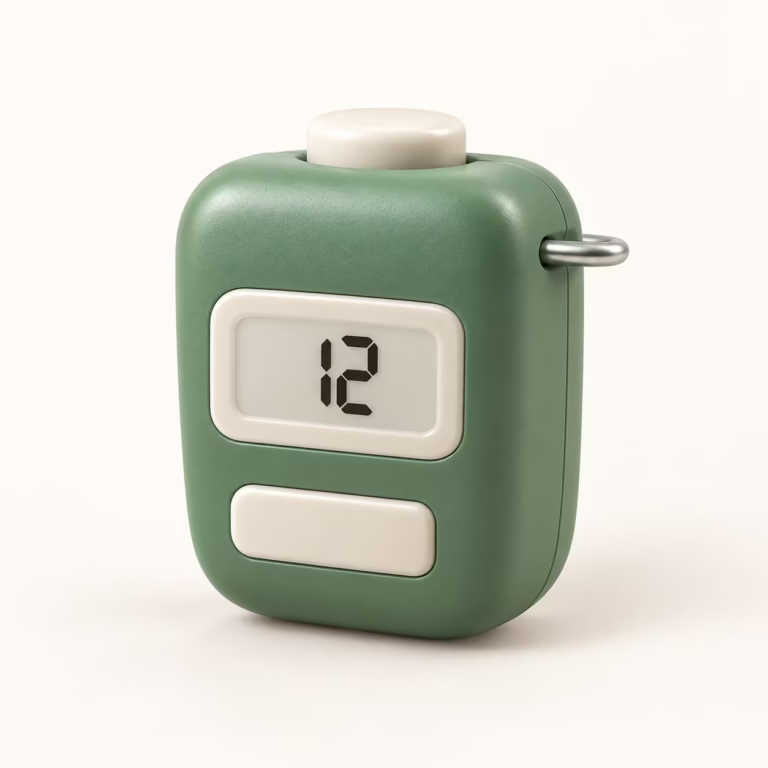
Row counter
Click counter · digital counterRemembers which row you are on, even when you put the work down for a week.
Row counter
Click counter · digital counter
Remembers which row you are on, even when you put the work down for a week.
- Counts
- 0–99 or 0–999
- Type
- Click, digital
- Price
- Very low
What it is
A small counter that adds one each time you press it. It remembers your row when you put the work down.
Press once at the end of each row. Essential for patterns with repeats.
When you need it
Garments, blankets with stripe repeats, and any pattern that says "repeat rows 2–5".
How to choose
- A big button you can press with one hand.
- A lock or reset guard against accidental clicks in your bag.
- A lanyard loop so it can hang from your project bag.
Press as soon as you turn the work, before you chain. You will never wonder whether you counted that row.
Relying on memory for long projects. A small break is all it takes to lose count.
 Next step
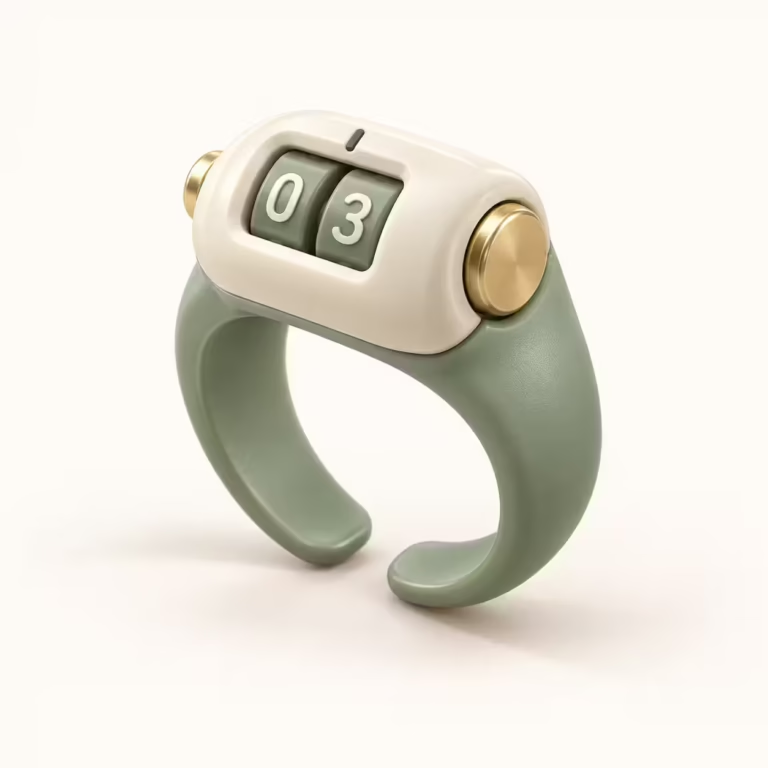
Finger row counter
Ring counter · thumb counterCounts rows or repeats from your finger, without putting the hook down.
Finger row counter
Ring counter · thumb counter
Counts rows or repeats from your finger, without putting the hook down.
- Counts
- 0–99
- Fit
- Adjustable ring
- Price
- Very low
What it is
A two-digit dial counter mounted on an open ring that you wear on your hook-hand finger. Your thumb turns the dial to the next number.
A tiny counter on an adjustable ring. Turn the dial with your thumb at the end of each row.
When you need it
Counting rows, rounds or pattern repeats on the go, and counting long foundation chains in groups of ten.
How to choose
- An adjustable band that fits snugly.
- A dial that clicks firmly, so it does not turn by accident.
- Large, high-contrast numbers.
Use the finger counter for repeats and a click counter for rows. Two counts at once, no paper.
Wearing it on the hand that holds the yarn. The dial catches the strand.
 Next step
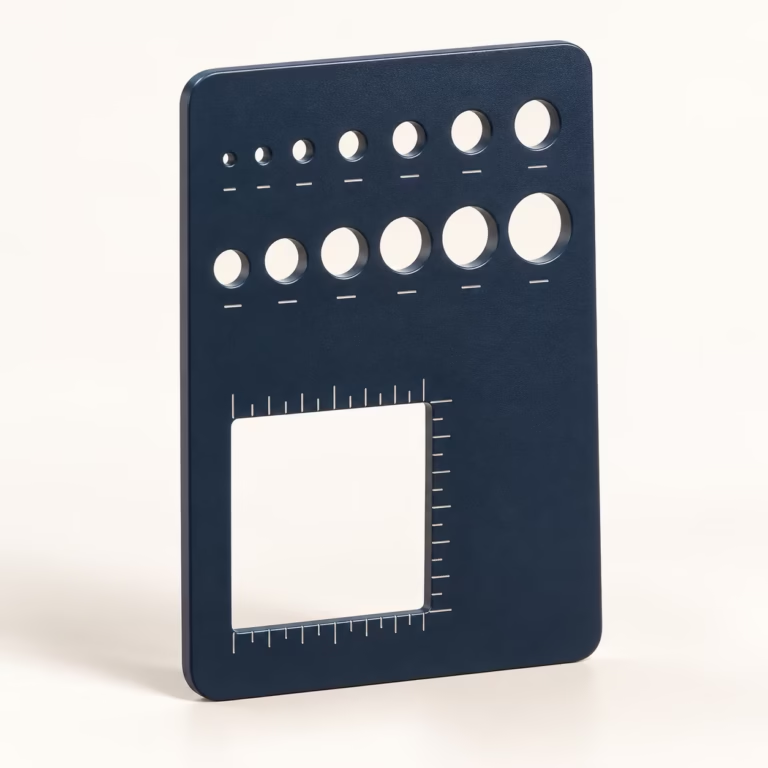
Gauge ruler
Hook gauge · swatch checkerChecks your stitch gauge and identifies any hook that has lost its size.
Gauge ruler
Hook gauge · swatch checker
Checks your stitch gauge and identifies any hook that has lost its size.
- Window
- 2 in / 5 cm
- Holes
- 2–10 mm
- Price
- Low
What it is
A flat ruler with a square window marked in inches and centimetres, and a row of holes. Push a hook through the smallest hole it fits to find its size.
A ruler with a window for counting stitches, plus holes that size unlabelled hooks.
When you need it
Counting stitches and rows in a swatch, and identifying hooks that have lost their size print.
How to choose
- A window of at least 2 in / 5 cm.
- Holes labelled in mm and US sizes.
- Metal or rigid plastic that stays flat.
Count stitches across the full 4 in / 10 cm, then divide. Counting only 1 in hides small differences.
Measuring a swatch before it is washed or blocked. Your finished piece will be blocked too.
 Starter
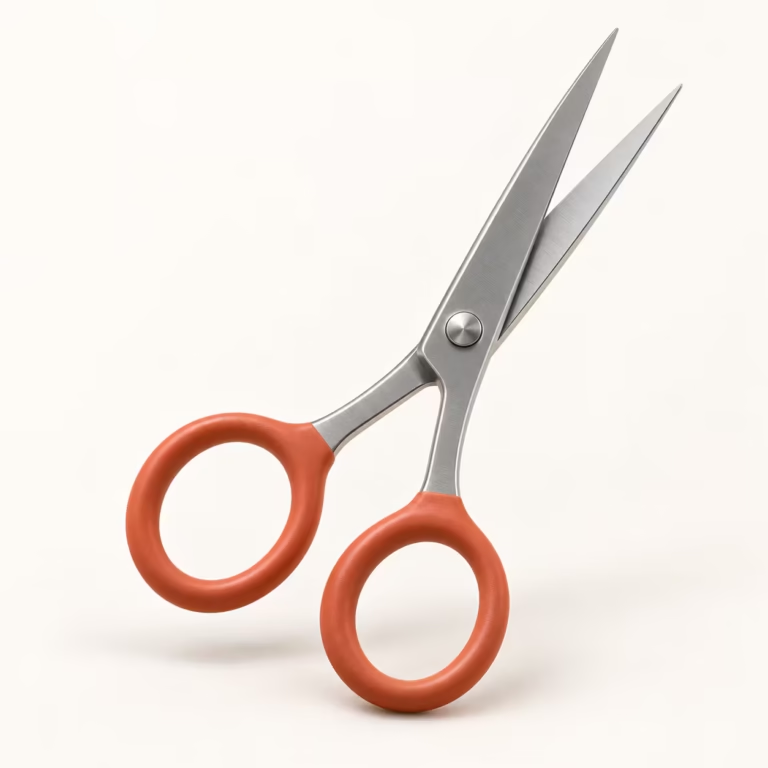
Small scissors
Embroidery scissors · yarn snipsCuts yarn cleanly and close to the fabric, so ends hide neatly.
Small scissors
Embroidery scissors · yarn snips
Cuts yarn cleanly and close to the fabric, so ends hide neatly.
- Blade
- 5–10 cm
- Material
- Stainless steel
- Price
- Low
What it is
Short, pointed scissors that cut cleanly close to the fabric. A clean cut leaves less fuzz to weave in.
Sharp, small and kept only for yarn, so the blades stay clean.
When you need it
Cutting yarn tails, trimming ends after weaving in, and cutting safety-eye washers free from packets.
How to choose
- Blades 5–10 cm long with sharp points.
- A blade cover or case protects your bag and your yarn.
- Comfortable finger loops that fit your hand.
Leave at least 15 cm of tail when you fasten off. You need that length to weave in properly.
Using your yarn scissors for paper. Paper dulls the blades quickly.
 Next step
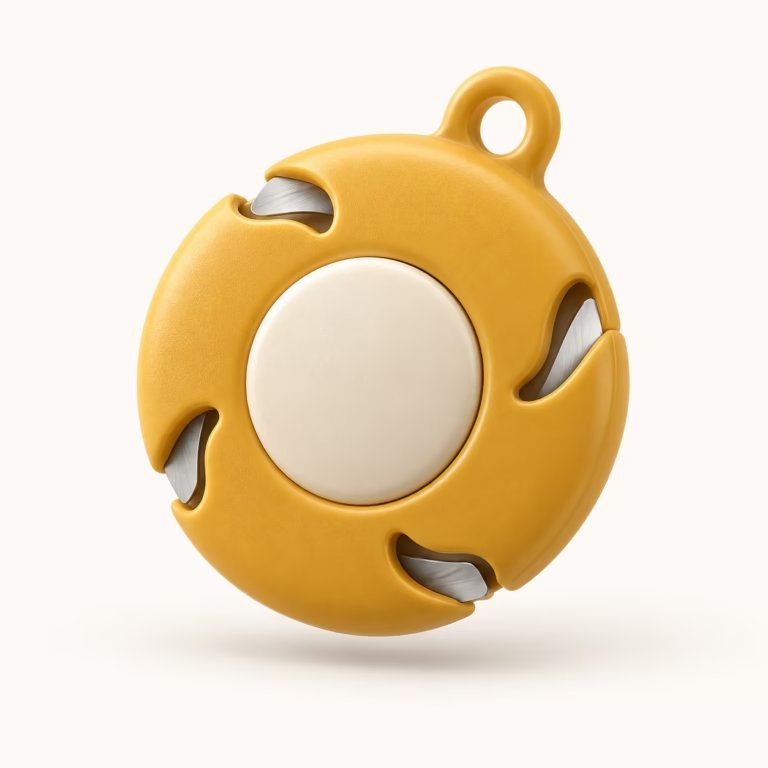
Yarn cutter pendant
Travel yarn cutter · thread cutterCuts yarn safely anywhere — on a plane, at school, around children.
Yarn cutter pendant
Travel yarn cutter · thread cutter
Cuts yarn safely anywhere — on a plane, at school, around children.
- Blades
- 4–6 recessed
- Material
- Plastic, steel
- Price
- Very low
What it is
A small disc with a blade recessed inside each notch. Fingers cannot reach the blade, but yarn pulled into a notch is cut cleanly.
A round pendant with hidden blades in the slots. Slide the yarn in and it is cut.
When you need it
Travel and commuting, crochet groups and classes, and anywhere sharp scissors are not welcome.
How to choose
- Several notches, so a dull one can be skipped.
- A loop to hang it on a lanyard or bag.
- Recessed blades with no exposed edge.
Pull the yarn taut before you slide it into the notch. A loose strand only frays.
Using it for trimming close to the fabric. For neat finishing, scissors are more precise.
 Starter
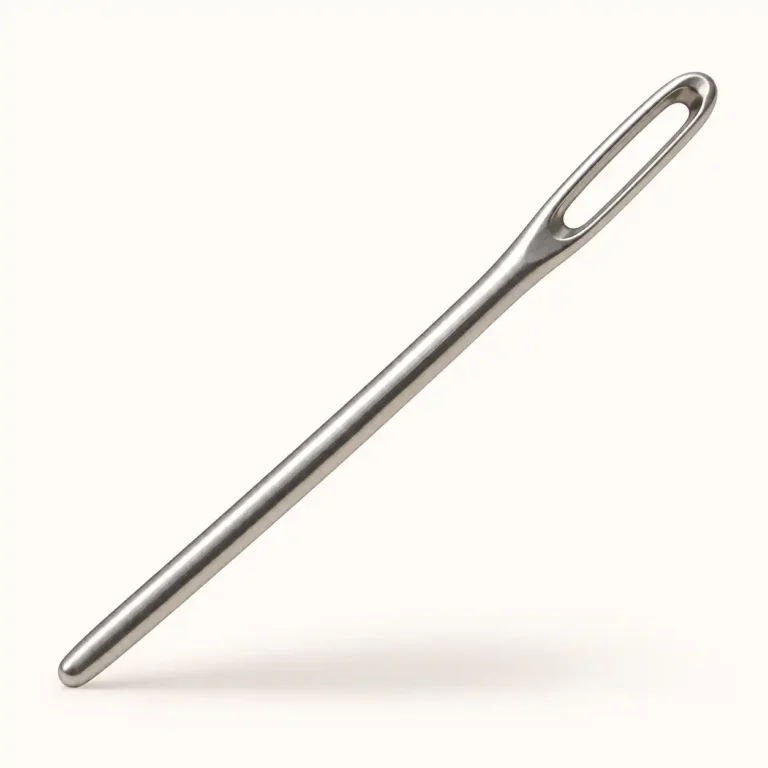
Tapestry needle
Yarn needle · darning needleWeaves in ends and sews pieces together without splitting the yarn.
Tapestry needle
Yarn needle · darning needle
Weaves in ends and sews pieces together without splitting the yarn.
- Sizes
- 13–18 (bigger = finer)
- Material
- Steel, aluminium
- Price
- Very low
What it is
A thick, blunt needle. The rounded tip slides between yarn plies instead of splitting them, and the large eye fits worsted yarn.
A blunt needle with a big eye for weaving in ends and sewing pieces together.
When you need it
Weaving in ends, joining granny squares, sewing amigurumi limbs and embroidering faces.
How to choose
- Get a set with straight and bent tips; bent tips are easier for seams.
- Metal lasts longest; plastic is fine for chunky yarn.
- The eye should take your yarn without fraying it.
Weave each end in three directions for about 5 cm. It will never pop out, even after washing.
Sharp sewing needles. They split the yarn and make ends easy to see.
 Next step
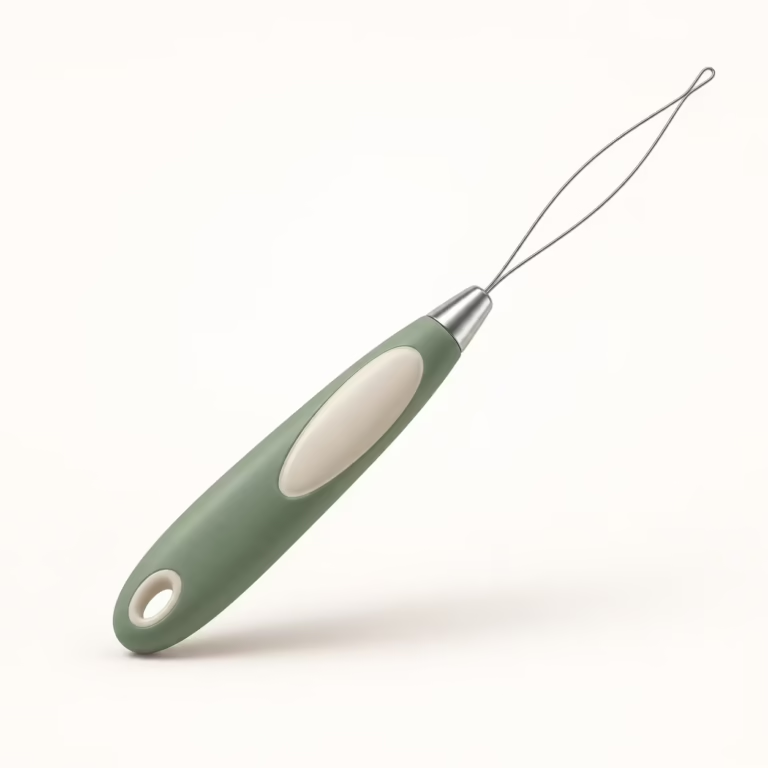
Needle threader
Yarn threader · wire threaderPulls thick or fuzzy yarn through a needle eye in one second.
Needle threader
Yarn threader · wire threader
Pulls thick or fuzzy yarn through a needle eye in one second.
- Fits
- Yarn and tapestry needles
- Material
- Steel wire
- Price
- Very low
What it is
A flexible diamond-shaped wire loop set in a handle. The wire passes easily through the eye, catches the yarn and pulls it back through.
A fine wire loop on a grip handle. Push it through the eye, drop the yarn in and pull back.
When you need it
Fuzzy, chunky and splitty yarn, short tails that are hard to thread, and tired eyes.
How to choose
- A strong wire for yarn; finer threaders are for sewing thread.
- A handle with a hanging hole so it does not get lost.
- A pack of two or three, because the loop wears out.
Fold the yarn tightly over the wire loop and pinch it flat before pulling. Bulky yarn slides through much more easily.
Forcing a thick yarn through a small eye. Choose a larger needle instead of breaking the wire.
 Next step
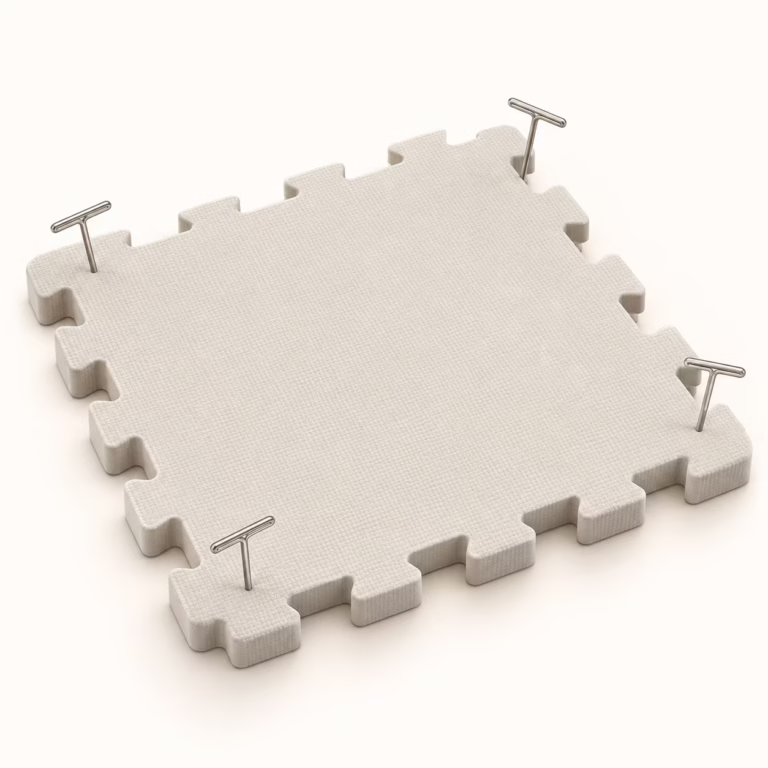
Blocking mats and pins
Foam mats · T-pinsLets you pin damp work to size, so squares match and lace opens up.
Blocking mats and pins
Foam mats · T-pins
Lets you pin damp work to size, so squares match and lace opens up.
- Mat size
- 30 × 30 cm tiles
- Pins
- Stainless T-pins
- Price
- Medium
What it is
Interlocking foam mats and rust-proof T-pins. You wet the work, pin it to the exact measurements, and let it dry.
Pin a damp piece to size and let it dry. Squares line up and lace opens beautifully.
When you need it
Granny squares before joining, shawls and lace, garment pieces, and anything that curls.
How to choose
- Mats with a printed grid for straight edges.
- Stainless T-pins that will not rust.
- Enough mats for your biggest project laid flat.
Block all granny squares to the same size before joining. A blanket comes out square, not wavy.
Steam blocking acrylic with a hot iron touching it. It melts flat and loses its bounce.
 Next step
2 photos
Next step
2 photos
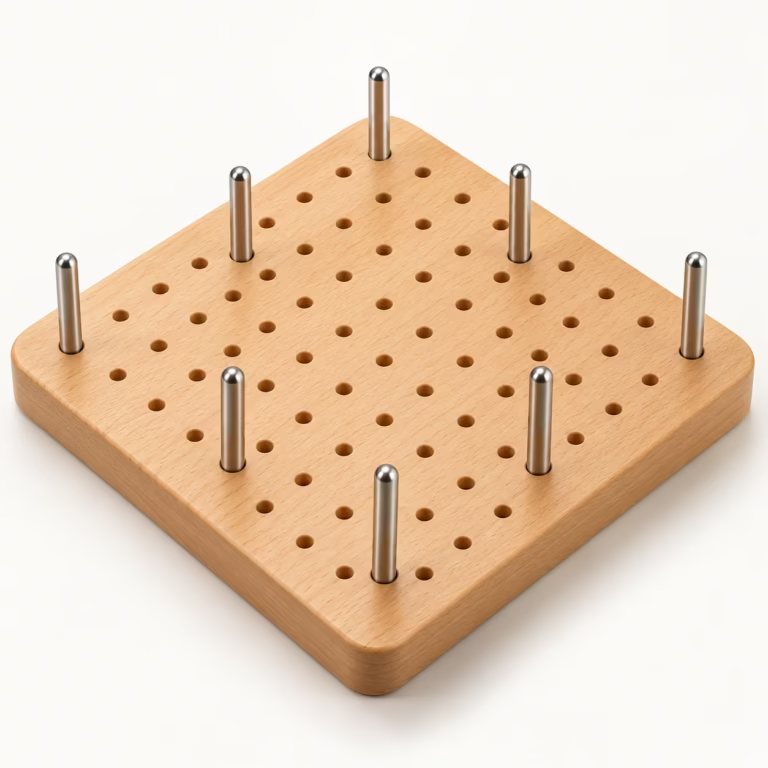
Granny square blocking board
Peg board · square blockerBlocks several squares to exactly the same size in minutes.
Granny square blocking board
Peg board · square blocker
Blocks several squares to exactly the same size in minutes.
- Size
- Up to 20 × 20 cm
- Material
- Wood and steel
- Price
- Medium
What it is
A solid wooden board with evenly spaced holes and removable steel pegs. The pegs form the corners and sides of a square of the size you choose.
A wooden board drilled with a grid of holes. Move the pegs to your size and slide squares over them.
When you need it
Granny squares, hexagons and motifs before joining, and stacking several squares to block them at once.
How to choose
- A board with sizes marked or holes in an even grid.
- Stainless pegs that will not rust on wet work.
- Large enough for 15 cm / 6 in squares.
Stack five or six damp squares on the same pegs. They dry together and come out identical.
Pulling squares onto pegs set too wide. They stretch out of shape and shrink back after.
 Specialist
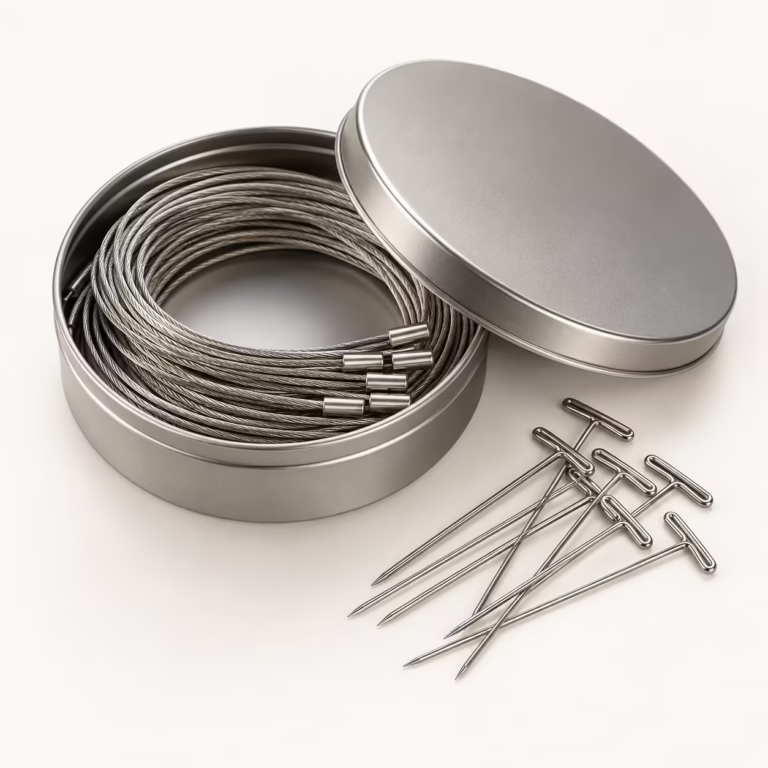
Blocking wires and T-pins
Lace blocking wires · flexible wiresGives shawls and lace long, perfectly straight edges with far fewer pins.
Blocking wires and T-pins
Lace blocking wires · flexible wires
Gives shawls and lace long, perfectly straight edges with far fewer pins.
- Length
- 60–90 cm wires
- Material
- Stainless steel
- Price
- Medium
What it is
Thin stainless wires, rigid and flexible, stored in a coiled tin with T-pins. Threaded through the edge stitches, a wire keeps the whole edge straight.
Long, flexible steel wires that you weave through the edge of a piece, then pin in a few places.
When you need it
Lace shawls, scarves, blanket edges and any straight edge that would otherwise scallop between pins.
How to choose
- Stainless steel only, so wet work never rusts.
- A mix of rigid wires for straight edges and flexible ones for curves.
- A tin to store them coiled and safe.
Thread the wire through every second or third stitch on the edge. Then three pins hold the edge where twenty used to.
Bending rigid wires into curves. They kink and leave marks; use the flexible ones.
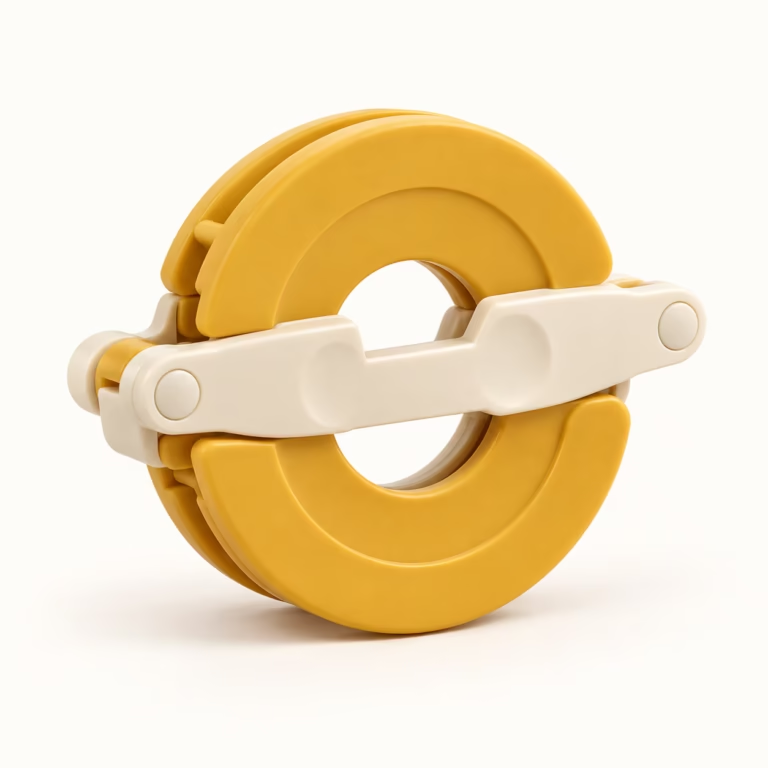 Specialist
Pom-pom maker
Pom-pom ringMakes round, dense pom-poms of the same size every time.
Pom-pom maker
Pom-pom ring
Makes round, dense pom-poms of the same size every time.
- Sizes
- 35–115 mm
- Material
- Plastic
- Price
- Low
What it is
A pair of hinged C-shaped rings. You wrap yarn around both halves, cut along the groove, tie a strand tight in the middle and open the rings.
Two hinged half rings you wrap with yarn, cut and tie: round, dense pom-poms in two minutes.
When you need it
Hats, scarves, garlands and blanket corners.
How to choose
- A set of four sizes covers baby hats to adult beanies.
- A deep groove makes cutting clean and safe.
- Hinged halves that click shut, so the wraps do not slide.
Wrap more than you think, then tie with a strong strand of the same yarn and trim to shape. A dense pom-pom looks professional.
Faux-fur or slippery yarn without a tight double knot. The pom-pom sheds strands with every wash.
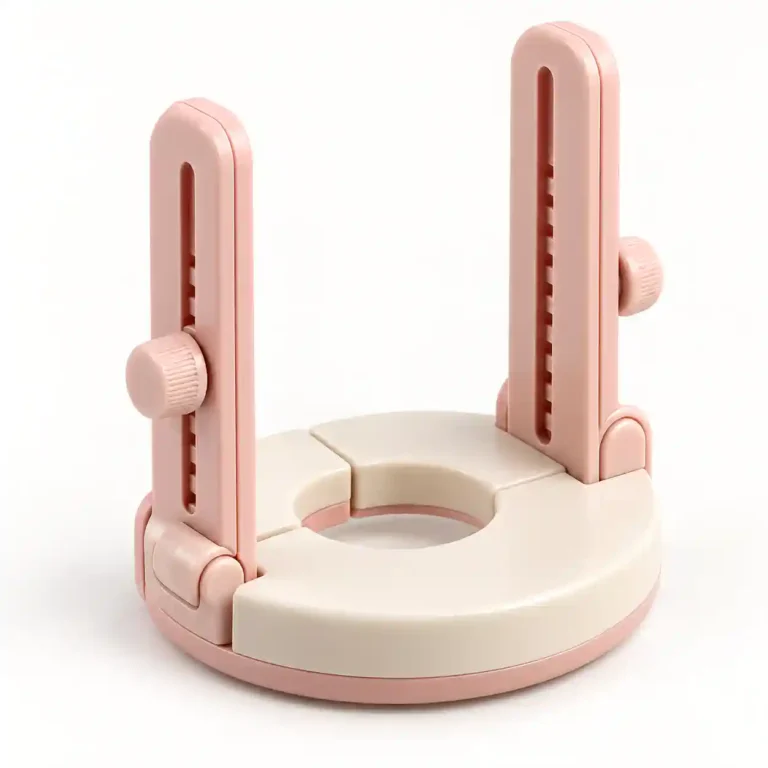 Specialist
Tassel and fringe maker
Adjustable tassel makerWraps tassels and fringe bundles to the exact same length.
Tassel and fringe maker
Adjustable tassel maker
Wraps tassels and fringe bundles to the exact same length.
- Lengths
- 5–15 cm
- Material
- Plastic
- Price
- Low
What it is
A base with two sliding posts marked in centimetres. You wrap yarn between the posts, tie the top, cut the bottom and the tassel is ready.
Two adjustable posts on a base. Set the height, wrap the yarn and get identical tassels.
When you need it
Tassels for hats, bags and bookmarks, and fringe bundles for blankets, shawls and wall hangings.
How to choose
- Posts that lock firmly at each height.
- Clear length markings.
- A base heavy enough to stay put while you wrap.
Count your wraps for the first tassel and write it down. Every tassel in the project will match.
Wrapping with tension. Tight wraps make tassels shorter once they are cut and relax.
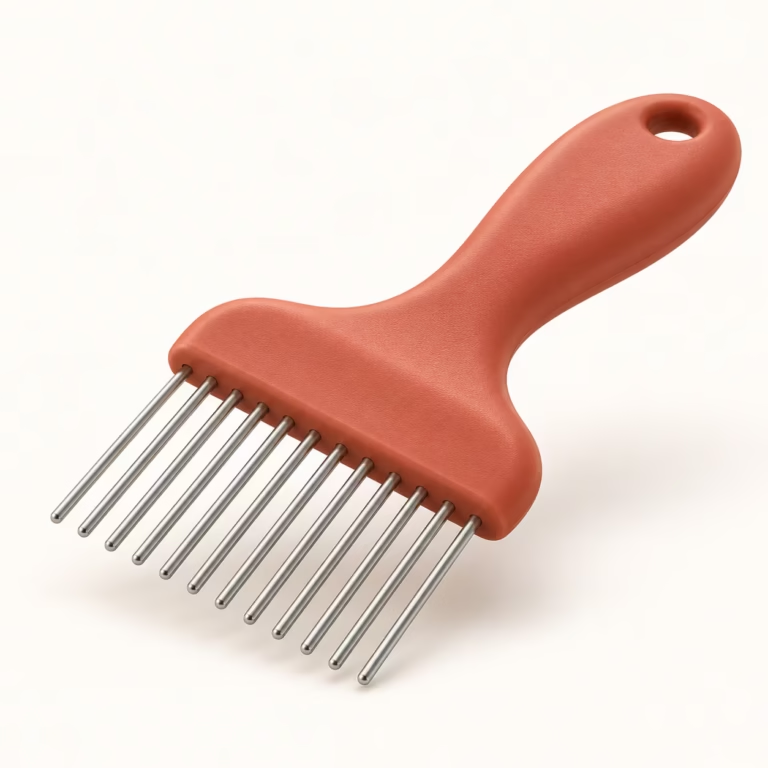 Specialist
2 photos
Specialist
2 photos
Fringe and tassel comb
Yarn rake · fringe brushCombs fringe and tassels straight, then helps you trim them to one length.
Fringe and tassel comb
Yarn rake · fringe brush
Combs fringe and tassels straight, then helps you trim them to one length.
- Pins
- 10–15 stainless
- Handle
- Plastic
- Price
- Low
What it is
A sturdy handle with a row of long stainless pins. Pulled gently through fringe or a tassel, it untangles the strands and lines them up for trimming.
Long, widely spaced steel teeth that separate and straighten fringe without pulling it out.
When you need it
Blanket and shawl fringe, tassels, macramé ends and untangling fringe after washing.
How to choose
- Pins with rounded tips that will not snag.
- Wide spacing for chunky yarn; closer spacing for fine yarn.
- A comfortable handle with a hanging hole.
Comb a damp fringe and let it dry flat. Then trim along a ruler for a perfectly even edge.
Combing from the knot outwards with force. Start at the tips and work up.
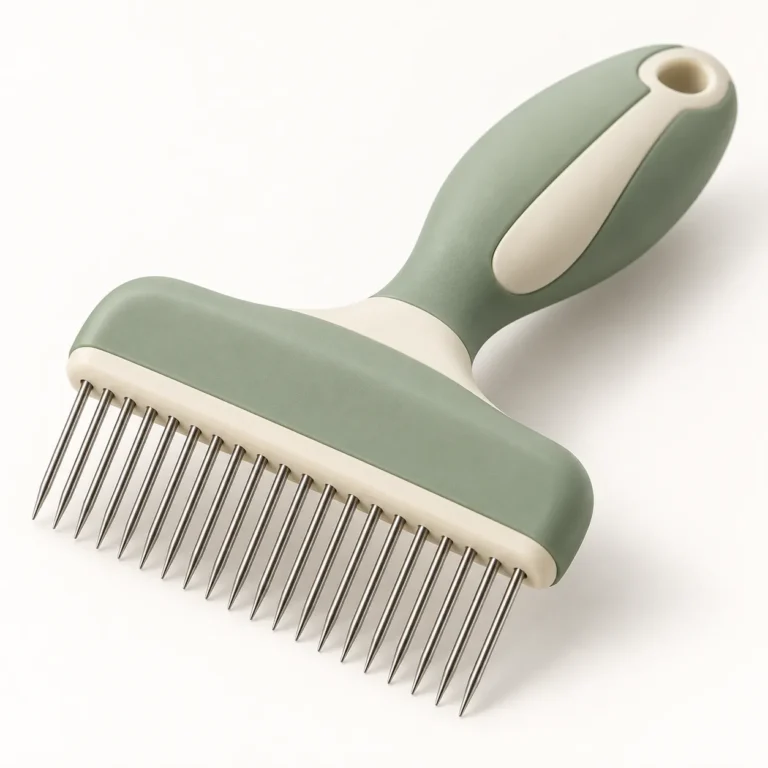 Specialist
Fluffing brush
Mohair brush · amigurumi brushBrushes the fibres up into a soft halo for fluffy toys and mohair work.
Fluffing brush
Mohair brush · amigurumi brush
Brushes the fibres up into a soft halo for fluffy toys and mohair work.
- Pins
- Fine steel
- Best on
- Acrylic, mohair, alpaca
- Price
- Low
What it is
A brush with many fine steel pins, close together, on a comfortable handle. Brushing lifts fibres out of the stitches and creates a plush finish.
Dense, fine steel bristles that raise a soft, fuzzy surface on finished pieces.
When you need it
Fluffy amigurumi bunnies and bears, brushed mohair and alpaca, and reviving flattened pieces.
How to choose
- Fine pins with smooth tips.
- A grip that keeps your wrist relaxed.
- A size that fits small toy parts.
Brush small parts before you sew them on, and always in one direction. The fur lies evenly.
Brushing smooth cotton or tightly twisted yarn. It only frays; the effect works on fluffy fibres.
 Next step
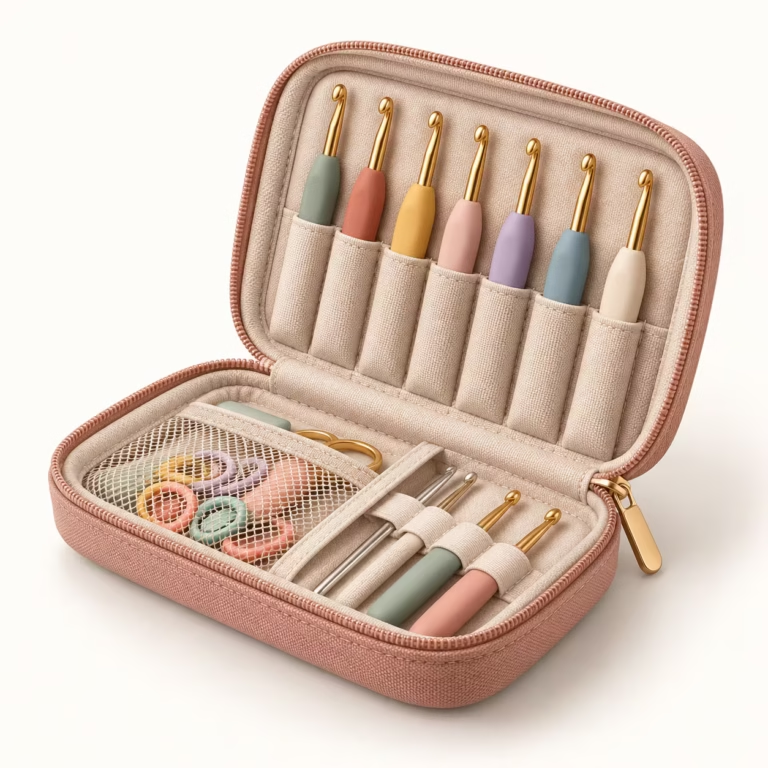
Hook case
Hook organiser · notions caseKeeps every hook sorted by size and protected from scratches.
Hook case
Hook organiser · notions case
Keeps every hook sorted by size and protected from scratches.
- Slots
- 8–20 hooks
- Material
- Canvas, faux leather
- Price
- Low to medium
What it is
A padded zip case with labelled elastic slots for hooks and mesh or zip pockets for small tools.
A zip case with a slot for each hook, plus pockets for markers, needles and small notions.
When you need it
From your second hook onwards, and any time you crochet away from home.
How to choose
- Slots labelled with mm sizes, so you can see a missing hook at once.
- A separate mesh pocket for markers, needle and scissors.
- A firm, padded shell that protects the hook heads.
Put each hook back in its slot as soon as the project is finished. Your next project starts with the right size, not a search.
Loose hooks at the bottom of a bag with scissors. Heads get scratched and snag the yarn.
 Next step
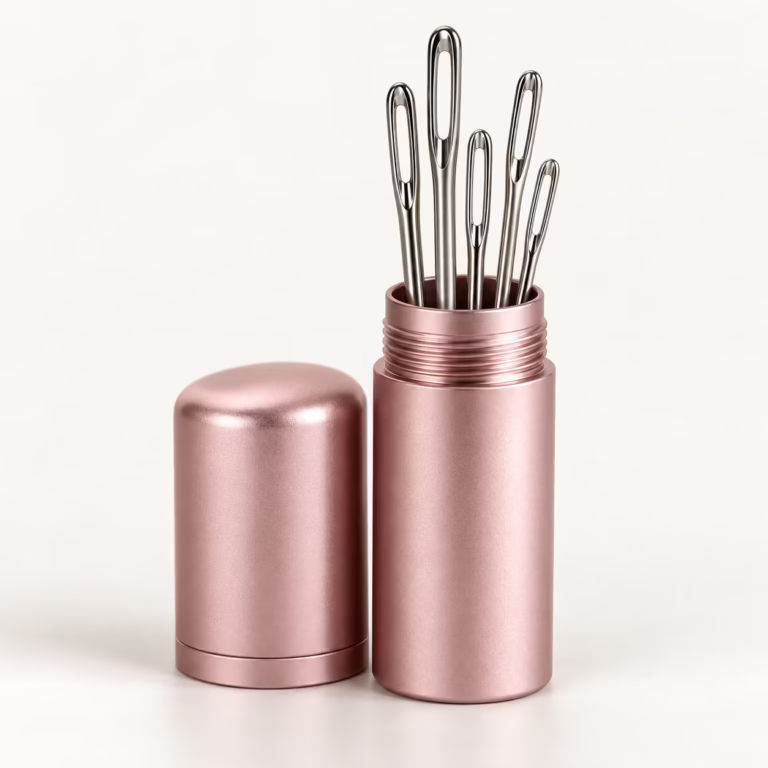
Needle case
Needle tube · needle keeperKeeps tapestry needles together, safe and easy to find.
Needle case
Needle tube · needle keeper
Keeps tapestry needles together, safe and easy to find.
- Holds
- 6–12 needles
- Material
- Aluminium
- Price
- Very low
What it is
A slim aluminium tube with a screw or push-fit lid. Needles stand inside it, so they cannot get lost in yarn or prick your fingers.
A small screw-top metal tube that holds a full set of yarn needles.
When you need it
Every project bag, travel kits, and homes with children or pets.
How to choose
- A metal tube that will not be pierced by needle tips.
- A lid that closes firmly.
- Long enough for your largest bent-tip needle.
Put a small magnet or a scrap of felt in the bottom. The needles stay put and come out one at a time.
Storing needles in a ball of yarn. They disappear inside it and can end up in a finished piece.
 Next step
2 photos
Next step
2 photos
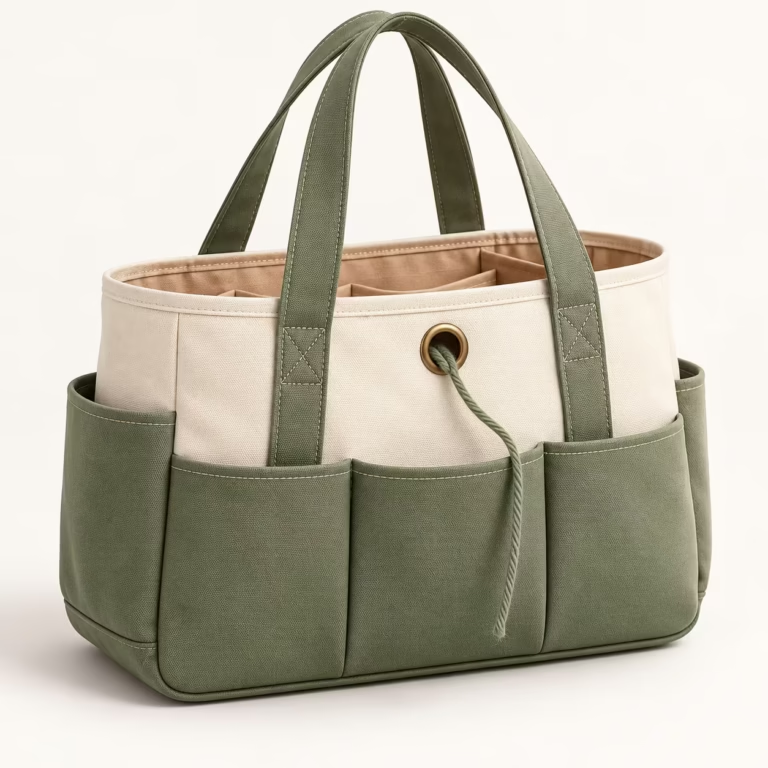
Project bag
Crochet tote · yarn bagKeeps the project, its yarn, pattern and tools together and ready to go.
Project bag
Crochet tote · yarn bag
Keeps the project, its yarn, pattern and tools together and ready to go.
- Size
- Medium tote
- Material
- Cotton canvas
- Price
- Medium
What it is
A canvas tote with an open main compartment for yarn and the project, outside pockets for tools, and a metal eyelet that the working yarn runs through.
A sturdy tote with outside pockets and a yarn grommet, so the ball feeds out while the bag stays closed.
When you need it
Crocheting away from home, keeping one project per bag and protecting yarn from pets and dust.
How to choose
- A yarn grommet, so the ball cannot roll away.
- Pockets on the outside for the hook case and pattern.
- Strong, washable canvas and comfortable handles.
Keep the pattern, the yarn label and a note of the row you stopped on in the bag. You can pick the project up weeks later without guessing.
Carrying scissors loose next to the yarn. Keep sharp tools in a pocket.
 Next step
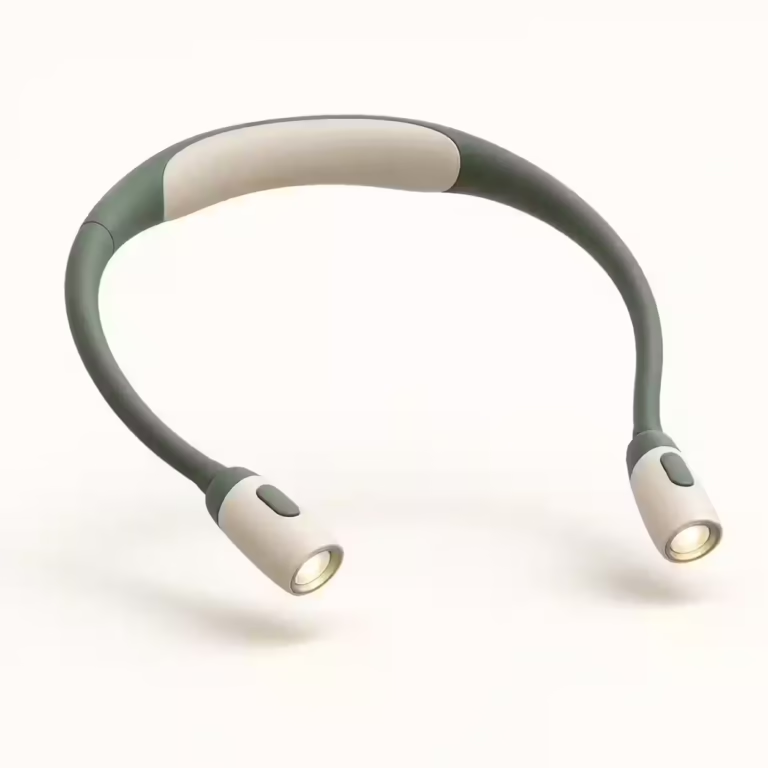
Neck reading light
Hands-free LED lightPuts bright, shadow-free light right on your stitches, with both hands free.
Neck reading light
Hands-free LED light
Puts bright, shadow-free light right on your stitches, with both hands free.
- Light
- 2 LEDs, 3 levels
- Power
- USB rechargeable
- Price
- Low to medium
What it is
A soft, bendable neck band with two adjustable LED heads. It lights your work from both sides, so your hands do not cast shadows.
A flexible band you wear around your neck, with an LED at each end aimed at your lap.
When you need it
Evening crochet, dark yarn, travelling, and counting stitches in low light without disturbing others.
How to choose
- Several brightness levels and a warm light setting.
- USB charging and at least 6 hours of light.
- Flexible arms you can aim precisely.
Use warm light in the evening. Colours look closer to daylight and your eyes tire less.
Pointing the lights straight forward. Aim them down at the work, not at people around you.
 Next step
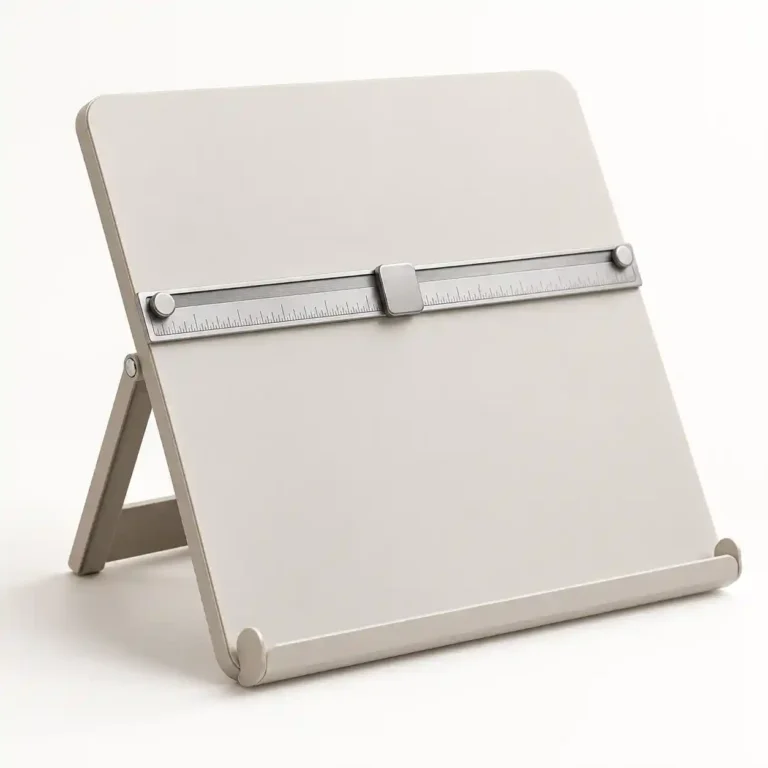
Magnetic pattern holder
Chart keeper · pattern boardHolds your pattern upright and marks the row you are on with a magnetic strip.
Magnetic pattern holder
Chart keeper · pattern board
Holds your pattern upright and marks the row you are on with a magnetic strip.
- Size
- A4 / letter
- Includes
- Magnetic strips
- Price
- Medium
What it is
A metal board with a folding stand, plus a long magnet that sits across the page. The magnet holds the paper and underlines the current row or round.
A folding board with a stand and a magnetic ruler. Slide the strip down as you finish each row.
When you need it
Charts, graphs for tapestry and C2C, long written patterns and any pattern with many rows.
How to choose
- A board big enough for A4 or letter paper.
- Strong magnets that do not slide.
- A stand that folds flat to carry.
Place the magnet below the row you are working on. You can still see the rows you finished, which is how you check your stitches.
Using it near phones or bank cards in a bag. Keep the magnets away from them.
 Next step
2 photos
Next step
2 photos
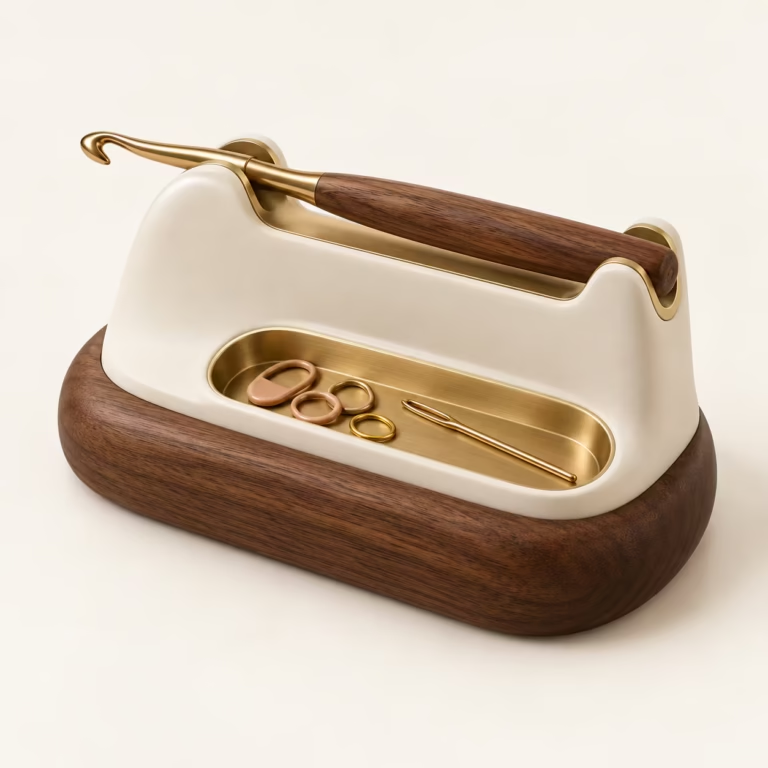
Hook rest and notions dish
Crochet desk caddy · stitch marker bowlGives your hook, markers and needle a fixed home on the table, so nothing rolls away mid-project.
Hook rest and notions dish
Crochet desk caddy · stitch marker bowl
Gives your hook, markers and needle a fixed home on the table, so nothing rolls away mid-project.
- Holds
- Hook, markers, needle
- Material
- Ceramic, wood, brass
- Price
- Medium
What it is
A small ceramic and wood stand with a groove for the hook and a shallow metal tray for markers and a needle. The matching dish has a centre post and a raised rim, so markers stay in one place and are easy to pick up.
A weighted rest that cradles your hook with a tray for small notions, plus a matching dish that keeps stitch markers together.
When you need it
Your crochet corner at home, pauses during a project, and anyone who keeps losing markers in the sofa.
How to choose
- A heavy base that does not tip when you lift the hook.
- A groove that fits both thin and ergonomic handles.
- A dish with a rim high enough to stop markers spilling.
Drop each marker into the dish as soon as you take it out of the work. You will always know how many are left.
Putting sharp scissors in the open tray. Keep the tray for markers, needles and short notions.
Yarn weights and the hook to use
Ranges from the Craft Yarn Council yarn weight standard. Always check the label of your yarn.
Hook size converter
| mm | US | UK |
|---|---|---|
| 2.25 mm | B-1 | 13 |
| 2.75 mm | C-2 | 11 |
| 3.25 mm | D-3 | 10 |
| 3.5 mm | E-4 | 9 |
| 3.75 mm | F-5 | — |
| 4 mm | G-6 | 8 |
| 4.5 mm | 7 | 7 |
| 5 mm | H-8 | 6 |
| 5.5 mm | I-9 | 5 |
| 6 mm | J-10 | 4 |
| 6.5 mm | K-10½ | 3 |
| 8 mm | L-11 | 0 |
| 9 mm | M/N-13 | 00 |
| 10 mm | N/P-15 | 000 |
| 15 mm | P/Q | — |
| 16 mm | Q | — |
| 19 mm | S | — |
The maths of crochet, done for you
Spacing increases evenly, round-by-round circles, gauge, yarn amounts and hat sizes. Change a number and the answer updates.
Patterns look like code. Paste a line, read it in plain English.
Type or paste any row from a pattern. The decoder explains every abbreviation, and shows the UK name when it is different — so a UK pattern never catches you out.
What would you love to make?
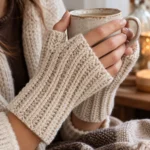
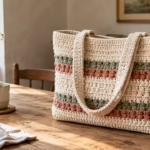
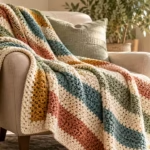
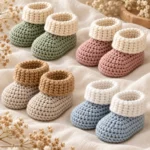
When a milestone clicks, jump into a project you are excited about.
The questions everyone asks in week one
Which hook and yarn should a beginner buy?
A 5 mm (H-8) hook and a smooth, light-coloured worsted weight yarn. Light colours make every stitch easy to see, and smooth yarn does not split.
How long does it take to learn crochet?
Most people make an even chain on the first evening and a simple coaster within a week of short daily practice. Speed comes on its own.
US or UK terms: which do your patterns use?
Every pattern here uses US terms. The pattern decoder on this page shows the UK name next to each stitch when they differ.
Why is my work getting wider or narrower?
Usually a stitch was added or skipped at the edge. Count your stitches at the end of every row and place a marker in the first and last stitch.
Is crochet easier than knitting?
Many beginners find it easier: there is only one live loop on the hook, so a dropped stitch never unravels the whole row.
My stitches are too tight. How do I fix that?
Relax your grip, let the yarn run over your index finger instead of pinching it, and pull each loop up to the widest part of the hook shaft. If it is still tight, go up one hook size.
I am left-handed. Can I learn from these tutorials?
Yes. Hold the hook in your left hand and work from left to right; every stitch is made the same way, just mirrored. Charts are read in the opposite direction.
How do I know which side is the right side?
When you work in rows, place a stitch marker on the side facing you in row 1 if the pattern calls it the right side (RS). In the round, the side facing you is usually the right side.
How do I count my stitches?
Count the V shapes along the top of the row, never the loop on your hook or the turning chain unless the pattern says it counts as a stitch. Most patterns give the total in brackets at the end of the row, like (24).
Is my progress on this page saved? Do I need an account?
No account is needed. Your milestones, Stitch Lab stars and settings are saved only in this browser on this device. Nothing is sent to us or to anyone else.
One new skill in your inbox every week
Short lessons that follow the Crochet Path, plus the free patterns as soon as they are tested.